Best Exercises for Heart Health: A Simple Guide to a Stronger Heart
Your heart works every minute of every day. It pumps blood to your brain, muscles, and organs without taking a break. That makes protecting your heart health one of the smartest long-term choices you can make. The good news is that you do not need an expensive gym membership or an extreme workout plan.

The best exercises for heart health are usually activities you can perform consistently. Brisk walking, cycling, swimming, jogging, dancing, and other forms of aerobic exercise can raise your heart rate and improve cardiovascular fitness. Strength training also matters because a well-rounded routine supports your muscles, mobility, body composition, and ability to stay active. (www.heart.org)
This guide explains how different exercises affect your cardiovascular system, how much activity you need, and how to increase intensity safely. You will also learn why consistency often matters more than choosing one supposedly perfect workout.
Why Exercise Is Important for Heart Health
Regular physical activity gives your cardiovascular system a reason to adapt. When you move, your heart muscle pumps faster and sends more blood toward working muscles. Over time, regular training can improve cardiovascular fitness and make everyday physical tasks feel easier. It can also support healthy blood pressure and weight management. (www.heart.org)
There is a bigger picture, too. Exercise and heart health are closely connected because inactivity can contribute to several major heart disease risk factors. Regular movement can help reduce the risk of heart disease, stroke, high blood pressure, and type 2 diabetes. For older adults, staying active is also linked with lower cardiovascular disease risk. (NIA)
Exercise also changes how you feel about movement. A person who starts with a ten-minute walk may discover that walking becomes easier after several weeks. That small improvement can create confidence. Confidence then makes the next workout less intimidating. This is important because long-term heart disease prevention depends on habits you can actually maintain.
Your goal should not be perfection. Instead, think about building a reliable rhythm. A short walk after dinner, a weekend bike ride, or a few resistance exercises at home can become part of normal life. When movement fits naturally into your day, regular physical activity becomes less like a chore and more like routine maintenance for your body.
Benefits of Aerobic Exercise for the Heart

Aerobic exercise is especially useful for cardiovascular conditioning because it keeps large muscle groups working continuously. As your activity becomes more demanding, your heart rate and breathing increase. Your body needs more oxygen, so your cardiovascular system works harder to deliver it. Walking, cycling, swimming, jogging, dancing, and similar activities can all provide this type of training. (Mayo Clinic)
One major benefit is improved aerobic fitness. This describes how effectively your heart, lungs, blood vessels, and muscles work together during sustained activity. Better fitness can make everyday tasks feel less tiring. Carrying groceries, climbing stairs, or walking across a large parking lot may become easier as your endurance improves.
The effect goes beyond fitness alone. Regular aerobic activity can support healthy blood pressure, weight management, and metabolic health. Exercise may also help improve cholesterol patterns and reduce the risk of conditions such as type 2 diabetes. These effects matter because high blood pressure, unhealthy cholesterol, diabetes, and inactivity can all contribute to cardiovascular risk. (Mayo Clinic)
You have many choices. Brisk walking works well for beginners. Swimming offers a low-impact option. Cycling can provide a challenging workout without requiring running. Running, tennis, dancing, and jumping rope can provide more vigorous options for people who tolerate them well. The best choice is the one that matches your fitness level and keeps you coming back.
What Is the Best Cardio Exercise for Heart Health?

There is no single winner for everyone. The best cardio exercise for heart health depends on your fitness level, preferences, joint comfort, schedule, and medical needs. For many beginners, walking is an excellent starting point because it requires little equipment and can be performed almost anywhere. The American Heart Association also describes walking as one of the simplest ways to become more active. (www.heart.org)
Consider someone who spends most of the workday sitting. Starting with a 30-minute run might feel exhausting and discouraging. A brisk 15-minute walk before work and another 15-minute walk after dinner may feel much more manageable. Once that routine becomes comfortable, the person can gradually increase pace or duration.
Cycling and swimming can be especially useful when you want variety. They can raise your heart rate while placing different demands on your muscles. If you enjoy running, it can provide vigorous cardio exercise. If you prefer music and social activity, dancing can make heart-pumping exercise feel more enjoyable.
| Exercise | Typical advantage | Good starting approach |
| Brisk walking | Simple and accessible | Increase pace gradually |
| Cycling | Builds endurance | Start with comfortable rides |
| Swimming | Low-impact option | Use steady intervals |
| Running | Vigorous cardiovascular work | Build distance gradually |
| Tennis | Cardio plus movement skills | Play at a manageable pace |
| Jumping rope | Efficient vigorous exercise | Begin with short intervals |
The important point is consistency. A moderate workout that you enjoy can be more valuable for your long-term cardiovascular health than an intense routine you abandon after two weeks.
How Regular Cardio Exercise Supports a Healthy Heart

During regular cardio, your body repeatedly challenges its circulation and energy systems. Your breathing becomes deeper and faster. Your heart rate rises. More blood moves through working muscles. These normal responses allow your cardiovascular system to practice meeting higher demands. (Mayo Clinic)
Over time, regular training can improve your ability to perform sustained activity. This is one reason a person who exercises consistently may climb stairs with less breathlessness than they experienced when they were inactive. Better cardiovascular fitness can make physical activity feel more manageable.
Exercise can also influence several factors connected with cardiovascular disease. Regular activity can help manage blood pressure, support healthier body weight, and improve metabolic health. It can also contribute to healthier cholesterol levels. These changes matter because heart disease often develops through the combined effect of several risk factors rather than one isolated problem. (NIDDK)
However, exercise should not be viewed as a replacement for medical treatment. If you have high blood pressure, high cholesterol, diabetes, or known heart disease, your healthcare professional can help you combine heart-healthy exercise with appropriate treatment, nutrition, sleep, and other lifestyle measures.
There is also a psychological advantage. When you complete a workout, you create evidence that you can keep promises to yourself. That sense of progress can strengthen motivation. Over months, repeated small successes can become a powerful foundation for a healthy heart and a more active lifestyle.
How Much Exercise Do You Need for Better Heart Health?
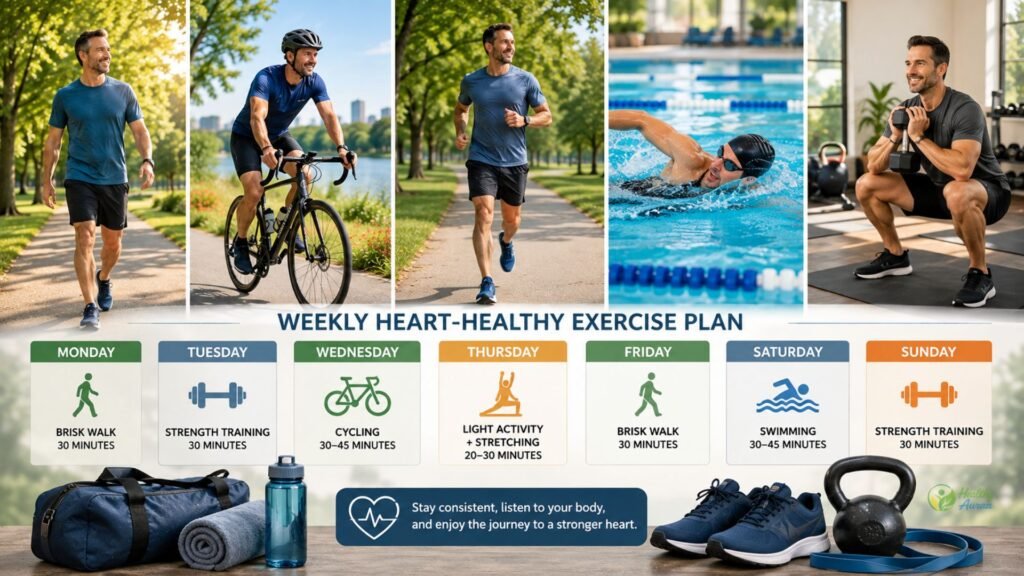
For most adults, current U.S. guidance recommends at least 150 minutes of moderate-intensity exercise each week or 75 minutes of vigorous aerobic activity. Adults should also perform muscle-strengthening activity on at least two days each week. You can combine moderate and vigorous activity rather than choosing only one. (www.heart.org)
A simple target is 30 minutes of exercise on five days each week. For example, you might take a brisk walk on Monday, Wednesday, and Friday and cycle or swim on the weekend. You do not need to complete every session in one uninterrupted block. Shorter periods of activity can add up during the day. (Mayo Clinic)
For people who want additional benefits and have the fitness to handle more activity, guidelines allow progression toward 300 minutes of moderate aerobic activity per week. More is not automatically better for everyone, however. Your exercise volume should match your fitness, recovery, age, and health status.
| Weekly goal | General recommendation |
| Moderate aerobic activity | 150–300 minutes |
| Vigorous aerobic activity | 75–150 minutes |
| Strength training | At least 2 days |
| Sitting time | Reduce prolonged periods |
The phrase 150 minutes of exercise per week can sound intimidating when you are starting from zero. Do not let the number become a psychological barrier. Five or ten minutes of movement is still a useful beginning. The American Heart Association specifically encourages inactive adults to start with achievable amounts and build gradually. (www.heart.org)
Understanding Exercise Intensity
Intensity describes how hard your body is working. During moderate-intensity exercise, your breathing becomes faster but you can generally talk. Singing a full song becomes difficult. During vigorous activity, breathing becomes much harder and holding a conversation becomes challenging. (www.heart.org)
Your heart rate can provide another clue. Some fitness plans use age-based heart-rate zones to estimate exercise intensity. These numbers are useful as general guides, but they are not perfect for everyone. Medications, fitness level, health conditions, and individual differences can affect your response to exercise. (Mayo Clinic)
For most beginners, perceived effort is easier to understand. Imagine a scale from very easy to extremely hard. A moderate workout should feel purposeful without leaving you completely drained. As your fitness improves, you can gradually increase your pace, resistance, distance, or duration.
| Intensity | How it may feel | Example |
| Light | Easy breathing and conversation | Casual walking |
| Moderate | Faster breathing but conversation remains possible | Brisk walking |
| Vigorous | Difficult to speak comfortably | Fast running |
Do not chase intensity simply because harder sounds better. Your goal is useful training that your body can recover from. If you have been inactive for a long time or have a chronic condition, discuss appropriate exercise intensity with a healthcare professional before beginning vigorous training.
Is HIIT Good for Heart Health?
High-intensity interval training, commonly called HIIT, alternates short periods of harder effort with recovery periods. For example, someone might walk easily for a few minutes, increase the pace for a short interval, and then recover before repeating the pattern. This structure can make a workout challenging without requiring continuous vigorous effort.
HIIT can improve aerobic fitness and may be useful for people who already have a reasonable fitness base. However, it is not a magic shortcut. A steady brisk walk can still provide meaningful cardiovascular benefits. For many people, especially beginners, consistent moderate exercise is a more comfortable place to start.
The biggest mistake is copying an advanced workout before developing basic fitness. A person who has spent months inactive may struggle with repeated sprints. Starting with moderate walking and gradually adding short faster intervals can create a more sensible progression.
People with known heart disease should take extra care. The American Heart Association notes that people with heart conditions can benefit from physical activity, but their program may need to be tailored to their condition. A healthcare team may recommend specific limits or cardiac rehabilitation. (www.heart.org)
If exercise causes concerning symptoms such as chest pain, unusual severe shortness of breath, dizziness, or palpitations, stop and seek medical guidance. Vigorous exercise is not a test of toughness. Safe progression matters more than proving how hard you can push.
How to Build a Heart-Healthy Exercise Routine
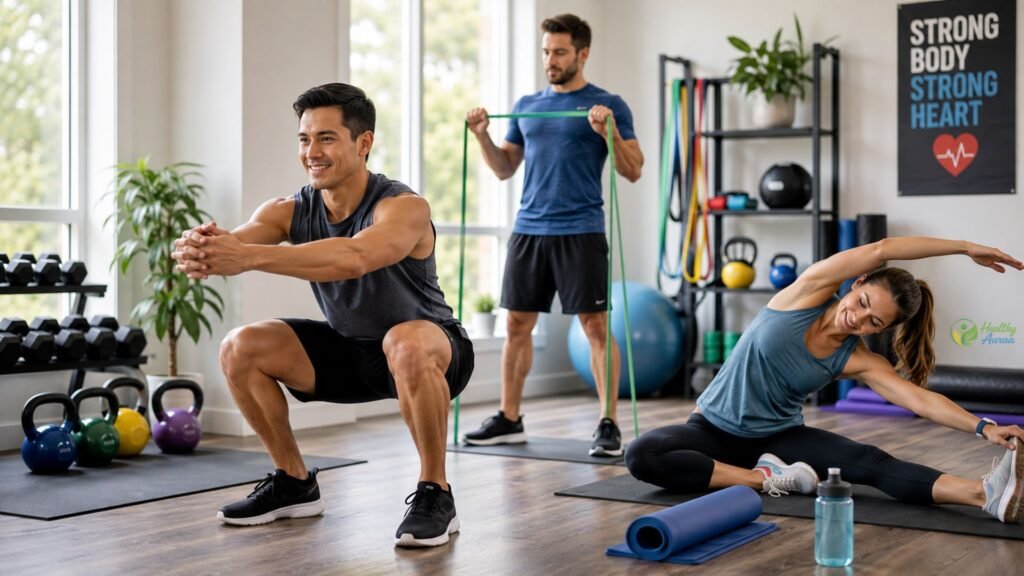
A strong heart-healthy exercise routine combines endurance, strength, mobility, and balance. Resistance training deserves special attention because stronger muscles can make everyday movement easier. You can use free weights, dumbbells, barbells, weight machines, resistance bands, or bodyweight exercises such as push-ups and squats. (www.heart.org)
Strength training can support lean muscle mass and improve body composition. It can also help you maintain physical function as you age. Exercises that challenge major muscle groups can include squats, presses, rows, and other controlled movements. The goal is not simply to lift the heaviest weight possible. Good technique and gradual progression matter.
A complete routine should also include stretching, flexibility exercises, and balance exercises. Flexibility supports comfortable movement, while balance and stability work can be especially useful as you get older. Yoga and tai chi are examples of activities that can combine movement, balance, and flexibility. (Mayo Clinic)
Stretching and flexibility do not replace aerobic or strength training. Instead, they complement them. Good musculoskeletal health can help you move comfortably and continue participating in other forms of exercise. If joint pain or limited mobility interferes with movement, a healthcare professional or physical therapist can help identify appropriate modifications.
A practical weekly plan could look like this:
| Day | Example activity |
| Monday | 30-minute brisk walk |
| Tuesday | Strength training |
| Wednesday | 30-minute cycling session |
| Thursday | Light walking and stretching |
| Friday | 30-minute brisk walk |
| Saturday | Swimming or another cardio activity |
| Sunday | Strength training and easy movement |
This is only an example. Your schedule can look completely different. The best exercise routine is one that fits your life and can continue beyond the first few enthusiastic weeks.
What If You’re Just Starting to Exercise?

Starting slowly is not a sign of weakness. It is a smart way to build capacity. If you have been inactive, begin with comfortable walking or another manageable activity. Even short sessions can help you create the habit of moving. The American Heart Association recommends setting reachable goals rather than allowing the 150-minute target to create an all-or-nothing mindset. (www.heart.org)
Imagine someone who works at a desk for eight hours each day. Instead of suddenly attempting an intense one-hour workout, that person might walk for ten minutes after breakfast and dinner. After several weeks, those sessions could become longer. Eventually, adding cycling or strength training may feel realistic.
You can also use your environment to make movement easier. Park farther from the store. Take stairs when appropriate. Walk while talking on the phone. Stand and move during long periods of sitting. These small choices increase physical activity without requiring a dramatic lifestyle overhaul.
Warm-ups and cool-downs can also make a workout feel more comfortable. Mayo Clinic recommends gradually increasing activity during a warm-up and easing the pace afterward. This allows your cardiovascular system to transition into and out of exercise more gradually. (Mayo Clinic)
If you have heart disease, diabetes, significant joint problems, or another chronic condition, ask your healthcare professional about an appropriate program. Some people may benefit from supervised exercise or cardiac rehabilitation. The safest plan is one designed around your actual health rather than a generic workout copied from the internet. (www.heart.org)
The Takeaway: Move More and Sit Less
The most effective exercise for heart health is not necessarily the most intense workout. It is the activity you can perform consistently, safely, and with enough effort to challenge your body. Aerobic exercise, strength training, flexibility work, and balance activities each have a useful role in overall fitness.
If you enjoy brisk walking, make it the foundation. If cycling motivates you, ride regularly. If swimming feels comfortable, use the pool. You can also combine activities to prevent boredom and train different parts of your physical fitness.
Remember the major goal: move more and sit less. The American Heart Association recommends at least 150 minutes of moderate aerobic activity each week for adults, along with muscle-strengthening activity on at least two days. (www.heart.org)
Your first workout does not need to transform your health overnight. One walk becomes another. One strength session becomes a routine. Eventually, those ordinary choices can build better cardiovascular health, stronger muscles, greater endurance, and a healthier relationship with movement.
Frequently Asked Questions About the Best Exercises for Heart Health
What is the best exercise for heart health?
For many people, brisk walking is an excellent starting point. However, cycling, swimming, running, dancing, and other cardio exercise can also support cardiovascular fitness. The best option depends on your health, fitness level, preferences, and ability to exercise consistently.
Is walking enough to improve heart health?
Yes. Regular brisk walking can contribute to recommended moderate physical activity levels and improve overall fitness. You can start with shorter walks and gradually increase duration or pace as your fitness improves. Walking is especially useful because it requires little equipment and can fit into everyday life. (www.heart.org)
How many days a week should you exercise for heart health?
Adults should aim for at least 150 minutes of moderate aerobic activity each week, preferably spread across the week. You should also include strength training two days a week. Your exact schedule can vary according to your lifestyle and fitness level. (www.heart.org)
Can strength training help your heart?
Yes. Strength training is part of a well-rounded physical activity program. It supports muscular strength and physical function and can complement aerobic exercise. You can use weights, machines, resistance bands, or bodyweight movements. (www.heart.org)
Is HIIT safe for everyone?
No. HIIT can be demanding because it uses vigorous effort. People who are new to exercise should build basic fitness first. If you have known heart disease or another medical condition, ask your healthcare professional whether vigorous interval training is appropriate for you.
Can exercise prevent heart disease?
Regular physical activity can help reduce several cardiovascular risk factors and is an important part of heart disease prevention. However, exercise does not eliminate every risk. Genetics, smoking, diet, blood pressure, cholesterol, diabetes, age, and other factors also influence cardiovascular health. (NIA)
Trusted Medical Sources
| Organization | Relevant information |
| CDC | Physical activity guidelines and health benefits |
| NIH | Cardiovascular disease and exercise research |
| American Heart Association | Exercise recommendations and heart health |
| Mayo Clinic | Aerobic exercise, fitness, and safe progression |
| Johns Hopkins Medicine | Exercise types and heart health |
| Cleveland Clinic | Exercise and cardiovascular health |
These sources provide evidence-based guidance for physical activity and cardiovascular health. Recommendations can change as research develops, so people with medical conditions should discuss personalized exercise plans with their healthcare professionals. (www.heart.org)
:::