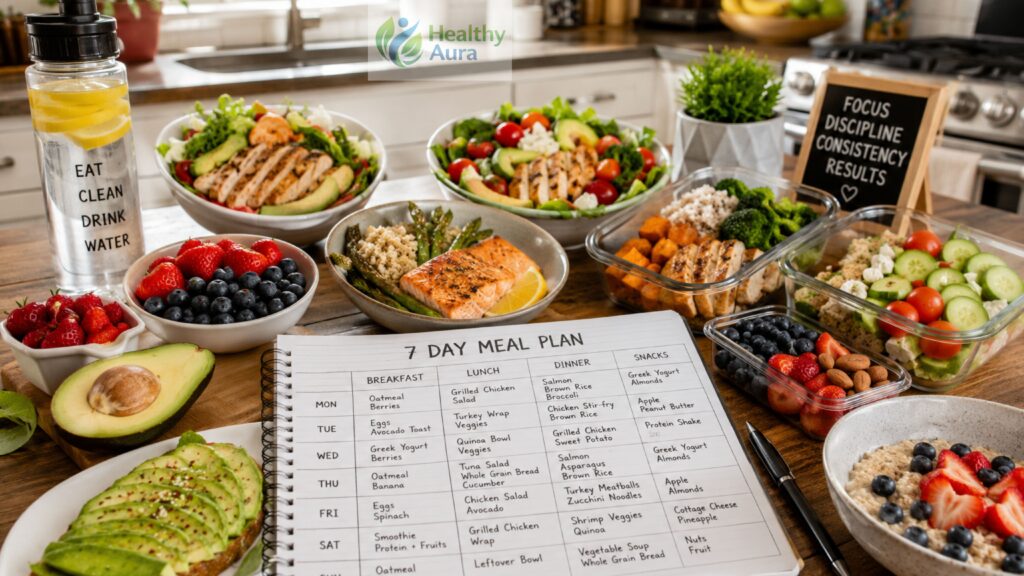
How Many Calories Should I Eat to Lose Weight? The Complete Guide to Daily Calorie Needs
Learn how many calories should I eat to lose weight with expert-backed guidance. Discover your daily calorie needs, calorie deficit, maintenance calories, and the best calorie intake for healthy weight loss.
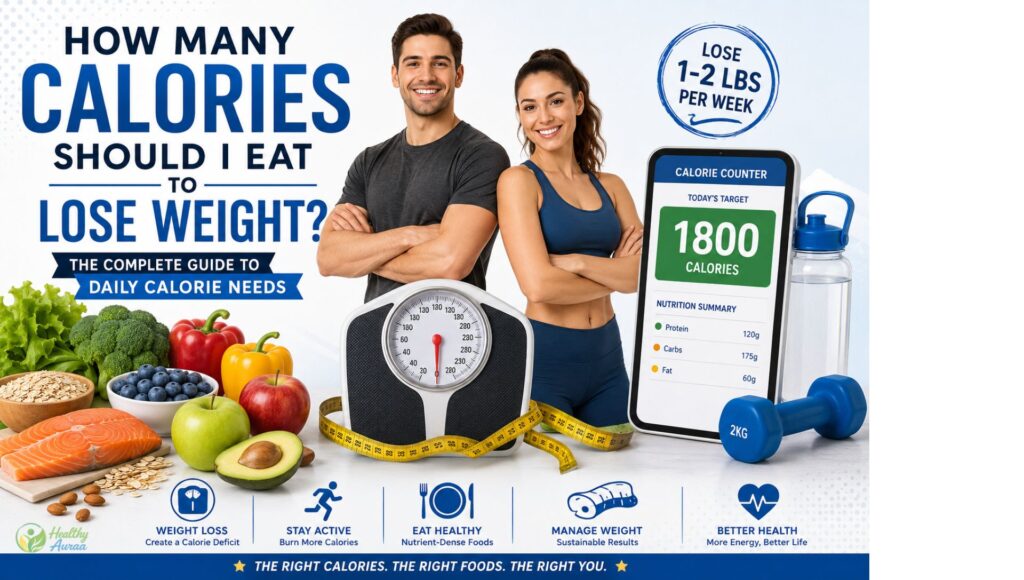
How Many Calories Should I Eat to Lose Weight?
If you have ever stood in your kitchen wondering, “How many calories should I consume to lose weight?” you are not alone. Millions of Americans ask this question every year. The reality is that there is no single answer that applies to everyone equally. Your body composition, age, metabolism, and activity levels all influence your caloric needs; a tall, highly active man will require significantly more energy than someone with a sedentary lifestyle.
Fundamentally, weight loss depends on energy balance. Your body consumes energy throughout the day; it burns calories when you sleep, walk, think, breathe, and exercise. If your energy intake is lower than your energy expenditure, your body begins to utilize its stored fat to meet its energy needs. This process creates a calorie deficit, which forms the foundation for healthy weight loss.
Experts from the CDC and Mayo Clinic recommend aiming for slow and steady progress. Generally, losing one to two pounds per week is considered a safe and sustainable approach. This typically involves reducing daily caloric intake by 500 to 1,000 calories. However, an excessive or drastic reduction in calories can be counterproductive; it may slow down your metabolism, increase hunger, and create a risk of nutrient deficiencies.
Understanding your numbers can feel like putting together a puzzle. Once the pieces fit, things become much easier. This guide explains how many calories do I need, how to calculate your daily calorie needs, and how to create a realistic plan for long-term success. By the end, you will know exactly how many calories should I eat to lose weight and how to adjust your plan as your goals change.
“Weight loss is a marathon, not a sprint. Consistency beats perfection every time.”
Calorie Calculator : Estimate Your Daily Calorie Needs
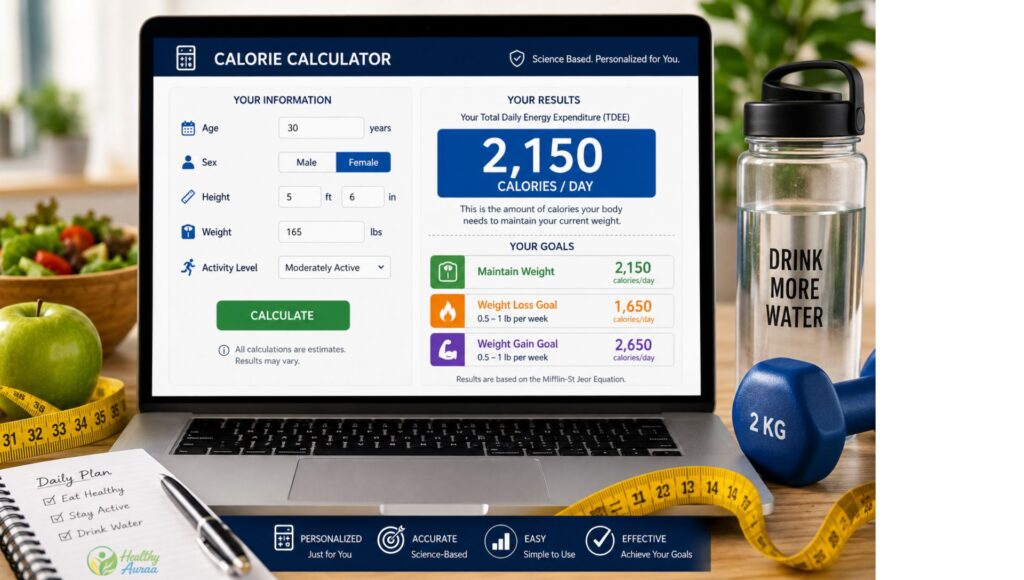
A calorie calculator is one of the simplest tools you can use to understand and meet your body’s energy needs. It estimates the number of calories required to maintain, lose, or gain weight. Think of it as a ‘GPS’ for your nutritional journey; without it, you might spend months relying on guesswork and facing frustration.
Most online calculators work by collecting basic information. They ask for your age, sex, height, weight, and activity level. From there, they estimate your total daily energy expenditure (TDEE). This number represents how many calories your body burns in a typical day. If you know your TDEE, you can create a plan for weight management with greater confidence.
Many people search for a weight loss calculator, a daily calorie calculator, or a calorie intake calculator because they want a quick answer. These tools provide a starting point rather than an exact prescription. Human bodies are wonderfully complicated. Hormones, sleep, stress, and medical conditions can all influence your results.
A good calculator can help answer questions like how many calories do I need to lose weight, how many calories do I need to maintain my weight, and how many calories should I eat to gain muscle. It can also help you understand whether your current eating habits support your goals.
Common Calorie Calculator Inputs
| Factor | Why It Matters |
| Age | Metabolism changes over time |
| Sex | Men and women have different calorie needs |
| Height | Taller people generally burn more calories |
| Weight | Larger bodies require more energy |
| Activity Level | Exercise and movement increase calorie burn |
| Goal | Weight loss, maintenance, or weight gain |
According to Harvard Health and the NIH, calorie calculators are useful tools when paired with regular progress tracking. They are not magic. They simply help you make better decisions using real data.
How Does a Calorie Calculator Work?
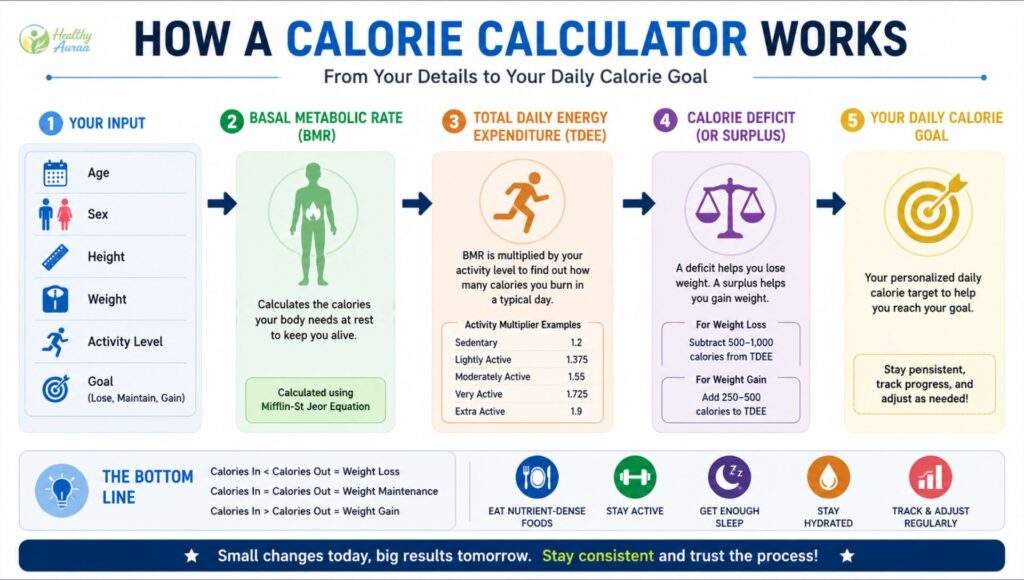
Most calorie calculators rely on well-established formulas developed by researchers. The most widely used formula today is the Mifflin-St Jeor equation. It estimates your basal metabolic rate (BMR), which is the number of calories your body needs to perform basic functions while at rest.
Your basal metabolic rate (BMR) covers things you never think about. It keeps your heart beating. It powers your lungs. It regulates your body temperature. Even if you stayed in bed all day, your body would still burn calories to stay alive. This is why eating too little for long periods can negatively affect your metabolic health.
Some experts also discuss resting metabolic rate (RMR). While BMR and RMR are slightly different, they are often used interchangeably in everyday conversations. Both provide insight into your body’s energy requirements and help estimate your maintenance calories.
After calculating BMR, the calculator applies an activity multiplier. Someone who is moderately active burns more calories than someone who works at a desk all day. Likewise, individuals who exercise regularly or perform physically demanding jobs have significantly higher calorie needs.
Activity Multipliers Used in Calorie Caculations
| Activity Level | Multiplier |
| Sedentary Lifestyle | 1.2 |
| Lightly Active | 1.375 |
| Moderately Active | 1.55 |
| Very Active | 1.725 |
| Extra Active | 1.9 |
The result is your total daily energy expenditure (TDEE). This number forms the basis for determining your calories per day, your calories to maintain weight, and your target for calories to lose weight.
How Do I Calculate How Many Calories I Need?
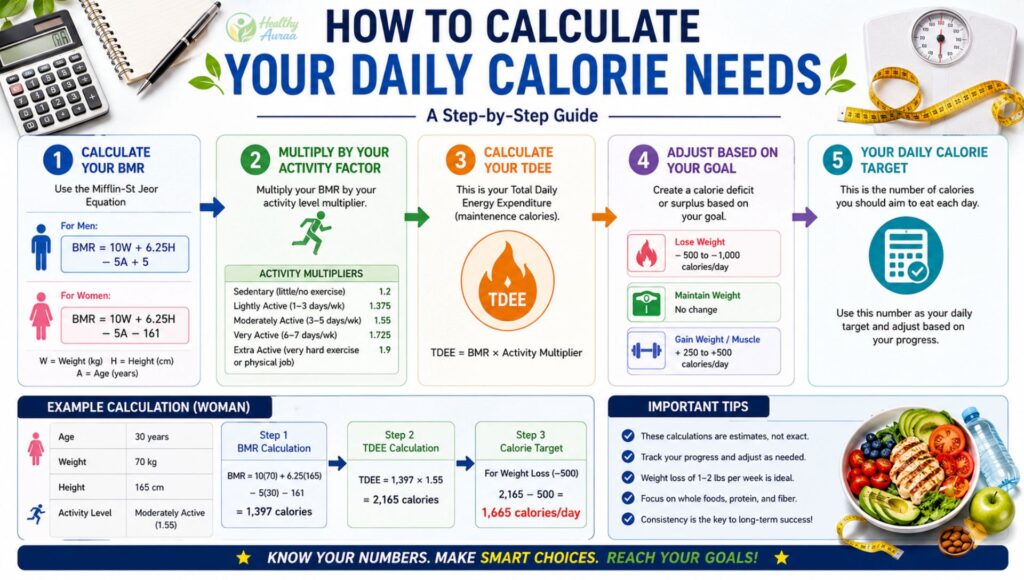
Calculating your calorie needs is easier than most people expect. Start by finding your BMR. Then multiply that number by your activity factor to estimate your TDEE. Finally, adjust your calories depending on your goal. This simple process answers one of the most searched questions online: how many calories should I eat to lose weight?
For example, consider a 35-year-old woman weighing 170 pounds who exercises three times a week. The energy required to maintain her weight (her maintenance level) would likely be around 2,100 calories per day. To lose one pound per week, she could reduce her daily calorie intake to approximately 1,600. This creates a manageable and sustainable caloric deficit for weight loss.
Meanwhile, someone trying to build muscle may ask, how many calories should I eat to gain weight or how many calories should I eat to gain muscle. In that case, adding 250 to 500 calories above maintenance often supports gradual gains while minimizing unwanted fat accumulation.
Your calorie needs are not fixed forever. As your body weight, body composition, and fitness level change, your numbers will change too. Losing 20 pounds may reduce your daily calorie requirements. Building additional lean body mass may increase them.
Many Americans use a calorie tracker, a calorie counter, or a calorie counter app to simplify the process. These tools make it easier to monitor food intake and identify patterns that may affect progress.
Example Daily Calorie Targets
| Goal | Daily Adjustment |
| Weight Maintenance | No change |
| Lose 1 Pound Per Week | -500 calories |
| Lose 2 Pounds Per Week | -1,000 calories |
| Gain Weight | +250 to +500 calories |
| Gain Muscle | +250 calories with strength training |
Understanding how to calculate calorie needs gives you more control over your health. It turns guesswork into a strategy.
How Many Calories Should You Eat Per Day?
One of the biggest nutrition myths is that everyone should eat the same number of calories. In reality, your ideal intake depends on several factors. The CDC notes that calorie needs vary widely across the population. This is why questions like how many calories should I eat a day continue to dominate search results.
Most adult women need between 1,800 and 2,400 calories each day to maintain their weight. Most adult men need between 2,200 and 3,000 calories. However, athletes and highly active individuals may require significantly more.
If your goal is healthy weight loss, reducing your calories moderately is often the best approach. Crash diets may produce quick results. Yet they are rarely sustainable. They can increase hunger, reduce energy, and negatively affect your relationship with food.
Food quality matters just as much as quantity. A 500-calorie meal filled with whole foods and nutrient-dense foods will keep you satisfied longer than 500 calories from ultra-processed foods and sugar-sweetened beverages. This is one reason why healthy eating remains a key part of successful weight loss.
People also tend to underestimate liquid calories. Sugary drinks can quietly add hundreds of calories each day. Replacing them with water is one of the simplest changes you can make. Health experts frequently recommend that you drink more water throughout the day to support overall wellness and appetite control.
General Daily Calorie Recommendations
| Group | Maintenance Calories |
| Adult Women | 1,800–2,400 |
| Adult Men | 2,200–3,000 |
| Active Teens | 2,000–3,200 |
| Older Adults | 1,600–2,400 |
These are averages. Your individual needs may differ depending on your goals and health status.
Daily Calorie Needs by Age, Sex, and Activity Level
Your calorie requirements change throughout life. A teenager playing sports five days a week has very different needs than a retired adult. This is why understanding calorie needs by age and calorie needs by sex is so important.
Men generally require more calories because they have a higher muscle mass. Due to differences in body size and composition, women often require fewer calories. However, caloric needs can increase significantly during pregnancy, breastfeeding, and physical activity.
Age also affects metabolism. Many people notice that maintaining their weight becomes harder as they get older. Part of this is due to lower activity levels and a gradual decline in muscle mass. Fortunately, regular exercise and adequate protein intake can help support long-term metabolic health.
Adding resistance training to your routine is especially helpful. Building muscle increases your resting calorie burn over time. Pairing strength workouts with a high-protein diet can support both weight maintenance and sustainable weight loss.
The table below provides general estimates for calories needed per day by age, calories needed per day for women, and calories needed per day for men.
| Age Group | Women | Men |
| 19–30 | 1,800–2,400 | 2,400–3,000 |
| 31–50 | 1,800–2,200 | 2,200–3,000 |
| 51+ | 1,600–2,200 | 2,000–2,800 |
These numbers should be viewed as guidelines rather than strict rules. Your calorie intake based on activity level will ultimately determine your personal needs. Someone who performs regular cardio exercise and exercise for weight loss may require substantially more calories than someone who spends most of the day sitting.
If you want personalized advice, consider speaking with a registered dietitian. Professional nutrition support can help you build a plan that fits your goals, preferences, and lifestyle. After all, a successful healthy lifestyle is not about perfection. It is about making choices you can maintain for years rather than weeks.
What Are Calories and Why Do They Matter?
Calories are units of energy. Every heartbeat, every breath, and every step you take requires energy. Your body uses calories the same way a car uses fuel. Without enough fuel, performance suffers. With too much fuel over time, excess energy is stored as body fat.
Many people think calories are the enemy. They are not. Calories keep your brain functioning and your muscles moving. They support hormone production and help maintain healthy organs. Understanding calories is essential if you want to answer the question, how many calories should I eat to lose weight.
The source of your calories matters just as much as the number. For example, 300 calories from grilled chicken, vegetables, and brown rice affect your body differently than 300 calories from chips and soda. Meals rich in whole foods and nutrient-dense foods usually provide more vitamins, minerals, and fiber.
Calories also influence your mood and energy levels. Eating too little may leave you feeling tired and irritable. Eating too much can contribute to gradual weight gain over time. Maintaining a healthy energy balance is often the key to long-term success.
Modern food environments make calorie awareness more important than ever. Restaurant portions have grown significantly over the past few decades. Many packaged foods contain hidden sugars and unhealthy fats. Learning how calories work gives you the knowledge needed to make informed decisions every day.
Calories in Common Foods
| Food Item | Approximate Calories |
| Apple | 95 |
| Banana | 105 |
| Grilled Chicken Breast | 165 |
| Cheeseburger | 300–500 |
| Slice of Pizza | 285 |
| Soda (12 oz) | 140 |
| Avocado | 240 |
Understanding where calories come from is the first step toward better weight management and a healthier relationship with food.
Why Calories Matter for Weight Loss
Weight loss is often presented as a complicated science. In reality, one principle sits at the center of nearly every successful plan: consume fewer calories than you burn. This is why calories matter so much when discussing how many calories should I eat to lose weight.
This does not mean that all calories are the same. The quality of food affects hunger, the feeling of fullness, and the ability to stick to a dietary regimen in the long run. A breakfast consisting of eggs and oats generally keeps you feeling full for longer than one of pastries and coffee. Making wise food choices can make maintaining a ‘calorie deficit’ much easier.
Calories also affect body composition. Losing weight should not mean losing muscle. Adequate protein intake combined with resistance training helps preserve lean body mass during a weight-loss phase. This is particularly important because muscle supports a healthy metabolism.
Research from the NIH suggests that gradual changes produce better outcomes than extreme diets. Severe calorie restriction may reduce energy levels and increase the likelihood of regaining lost weight. Sustainable habits almost always outperform short-term fixes.
Weight loss is not simply about eating less. It is about creating a plan that supports your health while fitting your life. The best diet is the one you can maintain next month and next year.
“Small choices repeated daily become powerful results over time.”
What Is a Calorie Deficit?
A calorie deficit occurs when your body uses more calories than it receives from food and beverages. Think of it as spending more money than you deposit into a savings account. Eventually, your body taps into stored energy reserves, which are primarily body fat.
For many people, understanding the concept of a calorie deficit finally answers the question, how many calories do I need to lose weight. If your maintenance level is 2,500 calories and you consistently consume 2,000 calories, you create a 500-calorie daily deficit.
Over a week, that deficit adds up. Since one pound of body fat contains approximately 3,500 calories, a daily deficit of 500 calories may lead to losing about one pound per week. Likewise, people asking how many calories to lose 1 pound a week can use this number as a practical guideline.
Larger deficits may produce faster results. However, they are not always better. Individuals wondering how many calories to lose 2 pounds a week should remember that a 1,000-calorie deficit can feel difficult to maintain. It may also increase hunger and fatigue if done improperly.
Creating a calorie deficit does not require perfection. You can combine modest dietary changes with increased physical activity. Walking after dinner, replacing soda with water, and preparing meals at home can all contribute to meaningful progress over time.
Common Calorie Deficit Examples
| Daily Deficit | Estimated Weekly Weight Loss |
| 250 Calories | 0.5 Pounds |
| 500 Calories | 1 Pound |
| 750 Calories | 1.5 Pounds |
| 1,000 Calories | 2 Pounds |
The goal is not to lose weight as quickly as possible. The goal is to achieve sustainable weight loss while protecting your health.
How Many Calories Should I Eat to Lose Weight?
The answer to how many calories should I eat to lose weight depends on several personal factors. There is no universal number that works for everyone. Your age, sex, height, current weight, and activity level all play an important role.
As a general guideline, many women lose weight on 1,200 to 1,800 calories per day. Men often lose weight on 1,500 to 2,200 calories per day. However, these numbers are only starting points. Someone who exercises daily may require significantly more calories to maintain proper energy levels.
A common mistake is cutting calories too drastically. Eating far less than the body requires can slow down progress over time and even lead to noticeable physical weakness; it can also negatively affect your mood, concentration, and workout performance. The weight-loss process should be sustainable and manageable, rather than feeling like an ordeal.
Another important consideration is meal timing and food selection. Spreading calories throughout the day can help control hunger. Many people find success by planning their calories for breakfast, calories for lunch, and calories for dinner ahead of time. This approach supports consistency and reduces impulsive eating.
Below is a simple example of a daily calorie distribution for someone following a 1,800-calorie plan.
| Meal | Calories |
| Breakfast | 400 |
| Lunch | 550 |
| Dinner | 600 |
| Snacks | 250 |
Remember, your ideal intake is personal. A maintenance calorie calculator, TDEE calculator, or BMR calculator can provide more precise recommendations. If you have underlying health conditions, seeking guidance from a healthcare provider is always a smart choice.
How to Reduce Your Daily Calorie Intake
Reducing calories does not mean giving up your favorite foods forever. In fact, many successful weight-loss journeys begin with small adjustments. Tiny changes can produce remarkable results when repeated consistently.
One of the easiest ways to lower your intake is to reduce liquid calories. Sugary drinks and other sugar-sweetened beverages provide energy without much fullness. Swapping soda for sparkling water or unsweetened tea can save hundreds of calories each week.
Another effective strategy is practicing mindful eating. Slow down during meals. Pay attention to hunger cues. It takes time for your brain to recognize fullness. Eating more slowly often leads to greater satisfaction with fewer calories.
Planning ahead can also make a major difference. Weekly meal prep reduces the temptation to order takeout after a long day. Keeping healthy snacks available can help prevent overeating when hunger strikes unexpectedly.
Finally, prioritize foods that keep you full. Meals rich in vegetables, lean proteins, and fiber tend to be more satisfying than meals dominated by refined carbohydrates and highly processed snacks. Building a balanced diet around quality ingredients makes it easier to maintain a healthy calorie target without feeling deprived.
Simple Food Swaps
| Instead Of | Try This |
| Regular Soda | Water with Lemon |
| Potato Chips | Air-Popped Popcorn |
| White Bread | Whole Grain Bread |
| Ice Cream | Greek Yogurt |
| Fried Chicken | Grilled Chicken |
Healthy changes do not have to happen overnight. The most successful people focus on progress rather than perfection. Over time, these habits become part of a lasting healthy lifestyle and support both obesity prevention and long-term well-being.
Tips for Reducing Calories Without Feeling Hungry
Many people assume that losing weight means feeling hungry all day. Fortunately, that is rarely true. The secret to managing hunger is choosing foods that provide volume, fiber, and protein. If you have ever wondered, how many calories should I eat to lose weight, remember that the quality of those calories matters just as much as the quantity.
Protein is especially important. Studies from Harvard Health show that higher protein intake can improve satiety and help preserve muscle during weight loss. A high-protein diet that includes eggs, chicken, fish, Greek yogurt, and beans can help you stay full for longer periods. This is one reason many experts recommend prioritizing protein at every meal.
Fiber is another powerful tool. Foods like vegetables, berries, oats, and legumes take up more space in your stomach without adding excessive calories. Pairing fiber with protein creates a combination that can significantly reduce cravings throughout the day.
Hydration also plays a role in appetite control. Mild dehydration can sometimes feel like hunger. Health professionals frequently encourage people to drink more water, especially before meals. A glass of water before lunch or dinner may help reduce overall food intake while supporting digestion and general wellness.
Sleep should not be overlooked either. Poor sleep can increase hunger hormones and make high-calorie foods more appealing. Maintaining a regular sleep schedule supports metabolic health and makes healthy decisions easier.
Foods That Help You Feel Full
| Food | Key Benefit |
| Eggs | High in protein |
| Oatmeal | Rich in fiber |
| Greek Yogurt | Supports satiety |
| Apples | Low calorie and filling |
| Chicken Breast | Lean protein source |
| Lentils | Fiber and protein |
Reducing calories should never feel like a punishment. The goal is to create habits that support long-term success and sustainable weight loss.
How to Increase Calorie Intake for Healthy Weight Gain
While many people focus on weight loss, others struggle to gain weight. Questions like how many calories should I eat to gain weight and how many calories should I eat to gain muscle are increasingly common, especially among athletes and individuals recovering from illness.
Healthy weight gain starts with a modest calorie surplus. Instead of adding empty calories from junk food, focus on nutrient-rich options. Foods like nuts, avocados, whole grains, eggs, and dairy products provide energy along with essential nutrients.
Strength training is another important factor. Pairing additional calories with resistance training encourages your body to build muscle instead of storing excess fat. This approach improves body composition and supports increases in lean body mass.
People trying to gain weight often underestimate how difficult it can be to eat more consistently. Adding healthy snacks between meals can help. Smoothies made with milk, fruit, and nut butter provide calories in a convenient form without causing excessive fullness.
Just as with weight loss, patience is important. Gradual progress tends to produce better results. Aiming to gain one to two pounds per month is often a realistic and sustainable target for most adults.
Healthy Foods for Weight Gain
| Food | Calories (Approx.) |
| Peanut Butter (2 tbsp) | 190 |
| Avocado | 240 |
| Mixed Nuts (1 oz) | 170 |
| Whole Milk (1 cup) | 150 |
| Salmon (6 oz) | 350 |
| Granola (1 cup) | 450 |
Healthy weight gain is not about eating everything in sight. It is about providing your body with the nutrients and energy it needs to thrive.
How Many Calories Does Exercise Burn?
Exercise plays a major role in overall health. It improves cardiovascular fitness, supports mental well-being, and increases daily calorie expenditure. Understanding calories burned through activity can help you better manage your nutrition plan.
The number of calories you burn depends on several factors. Your weight, exercise intensity, duration, and fitness level all influence the total. For example, a 200-pound person generally burns more calories during a walk than someone who weighs 140 pounds.
Both cardio exercise and resistance training offer unique benefits. Cardio burns more calories during the workout itself. Strength training, however, helps build muscle, which can increase calorie burn over time. Combining both forms of exercise is often the most effective strategy for long-term weight management.
People frequently ask whether exercise alone is enough for weight loss. In most cases, nutrition remains the primary driver. You cannot out-exercise a consistently poor diet. However, regular movement makes maintaining a calorie deficit significantly easier.
Exercise should also be enjoyable. Walking, cycling, dancing, swimming, and hiking all count. The best workout is the one you can continue doing months from now.
Estimated Calories Burned in 30 Minutes
| Activity | Calories Burned |
| Walking | 120–170 |
| Jogging | 250–400 |
| Swimming | 200–350 |
| Cycling | 250–450 |
| Strength Training | 180–300 |
| Hiking | 220–400 |
Regular exercise for weight loss supports better health, improved energy, and stronger long-term habits.
Choosing Healthy Foods Based on Calories
Not all calories affect your body in the same way. Two meals may contain identical calorie counts while producing completely different results. This is why food quality remains an essential part of any nutrition plan.
Foods rich in vitamins, minerals, and fiber should make up the majority of your diet. These include fruits, vegetables, lean proteins, legumes, and whole grains. Building meals around whole foods helps improve fullness while supporting overall health.
On the other hand, foods high in added sugars and refined ingredients often provide calories without much nutritional value. Regular consumption of ultra-processed foods and refined carbohydrates may contribute to overeating because they are typically less filling.
A simple way to think about food choices is to ask one question: “Will this meal help me feel satisfied for the next few hours?” If the answer is yes, it is likely a good option. Meals that combine protein, fiber, and healthy fats tend to perform best.
Healthy eating is not about perfection. It is about consistency. Enjoying a slice of birthday cake occasionally is completely compatible with a balanced lifestyle. Long-term habits matter far more than individual meals.
Nutrient-Dense Food Examples
| Category | Examples |
| Protein | Chicken, Eggs, Fish |
| Fruits | Apples, Berries, Oranges |
| Vegetables | Broccoli, Spinach, Carrots |
| Whole Grains | Oats, Brown Rice, Quinoa |
| Healthy Fats | Nuts, Olive Oil, Avocado |
Building your diet around healthy eating, a balanced diet, and nutrient-dense foods creates a strong foundation for lifelong wellness.
Benefits of Counting Calories
For some people, calorie counting can be a powerful educational tool. It provides insight into eating habits and helps identify areas for improvement. Many individuals are surprised to learn how quickly small snacks and beverages add up over the course of a day.
Tracking your intake also creates accountability. Using a calorie tracker, calorie tracking app, or calorie counter app makes it easier to monitor progress. These tools can estimate portion sizes, record meals, and help you stay aligned with your goals.
Counting calories can improve awareness of portion sizes. Restaurant servings are often much larger than people realize. Logging meals for even a few weeks can provide valuable perspective and make healthier choices feel more intuitive.
Another benefit is flexibility. Calorie tracking allows room for your favorite foods. Rather than labeling foods as “good” or “bad,” you can focus on your overall intake and maintain a healthier relationship with eating.
Of course, calorie counting is not required for everyone. Some people prefer to focus on hunger cues and food quality instead. The best approach is the one that helps you stay consistent without creating unnecessary stress.
Popular Calorie Tracking Tools
| Tool Type | Purpose |
| Food Journal | Manual tracking |
| Smartphone Apps | Convenient logging |
| Smart Watches | Activity monitoring |
| Digital Scales | Portion accuracy |
| Nutrition Apps | Meal planning support |
Whether you use a notebook or a mobile app, understanding your calorie intake can provide valuable insight into your eating patterns and support long-term success.
Potential Risks of Counting Calories
While keeping track of calories can be helpful, it is not the only factor that matters. For some people, focusing too heavily on the numbers can create stress around eating. Food should support your health and happiness; sitting down to a meal shouldn’t feel like solving a math problem.
Those who become overly rigid about tracking often ignore their hunger cues. They may continue eating according to an app, even when their bodies are signaling a need for more food. This can sometimes lead to frustration, fatigue, and an unhealthy relationship with food..
Another concern is accuracy. Food labels are estimates. Restaurant meals can vary significantly. Even the best calorie counter cannot account for every variable. This is why experts encourage people to use calorie tracking as a guide rather than an absolute rule.
Extreme calorie restriction can also have consequences. Eating too few calories for long periods may contribute to low energy, poor workout performance, and potential nutritional deficiencies. In some cases, it can affect hormone levels and slow aspects of your metabolism.
If calorie tracking becomes overwhelming, it may be helpful to work with a registered dietitian. Professional nutrition support can help you develop sustainable habits while protecting your physical and mental well-being.
Signs You May Be Tracking Too Strictly
| Sign | Why It Matters |
| Feeling guilty after eating | May indicate an unhealthy mindset |
| Avoiding social events | Can reduce quality of life |
| Constant fatigue | May signal under-eating |
| Obsessive food logging | Can increase stress |
| Ignoring hunger cues | May disrupt normal eating patterns |
The goal of tracking is awareness. It should support your journey toward better health, not become another source of anxiety.
How to Track Your Calories Effectively
If you decide to track calories, consistency matters more than perfection. Logging most of your meals accurately will usually provide enough information to make meaningful progress. Missing a few entries from time to time is completely normal.
Start by choosing a method that fits your lifestyle. Some people prefer a notebook while others use a calorie tracker or calorie counter app. The best tool is the one you will continue using several weeks from now.
Portion size is also an important aspect. Measuring cups and food scales can improve accuracy, especially during the first few months. Over time, many people gain a better understanding of portion sizes and no longer need to measure everything.
Meal planning can make tracking much easier. Preparing food ahead of time allows you to know exactly what you are eating throughout the week. Many people find that combining tracking with meal prep improves consistency and reduces last-minute decisions.
Finally, remember that calorie tracking is just one piece of the puzzle. Sleep, stress management, hydration, and exercise all contribute to overall health. Weight loss is rarely the result of one habit. It is usually the combination of many small actions repeated consistently.
Tips for Better Calorie Tracking
| Tip | Benefit |
| Log meals immediately | Improves accuracy |
| Use a food scale | Helps estimate portions |
| Plan meals ahead | Reduces guesswork |
| Track beverages | Prevents hidden calories |
| Review weekly trends | Identifies patterns |
A good tracking system should feel simple and sustainable. If it feels overwhelming, simplify it until it works for your lifestyle.
Frequently Asked Questions About Calories
Can I Lose Weight Without Counting Calories?
Yes. Many people lose weight by focusing on portion control, eating more protein, and choosing nutrient-rich foods. However, calorie awareness often makes the process easier. If you are asking, how many calories should I eat to lose weight, tracking your intake for a few weeks can provide valuable insight.
How Many Calories Should I Eat a Day?
The answer depends on your age, sex, size, and activity level. Most women require between 1,800 and 2,400 calories for maintenance. Most men need between 2,200 and 3,000 calories. Your personal needs may be higher or lower.
How Many Calories Do I Need to Maintain My Weight?
Your maintenance level is based on your total daily energy expenditure (TDEE). A maintenance calorie calculator or TDEE calculator can help estimate this number. Once you know your maintenance calories, you can adjust them according to your goals.
Is 1,200 Calories a Day Safe?
For some smaller individuals under medical supervision, it may be appropriate. However, many adults need more than 1,200 calories to support normal bodily functions. Consuming too few calories can increase the risk of fatigue and nutritional deficiencies.
How Many Calories Do I Need to Lose Weight?
This is one of the most common nutrition-related questions in the United States. In many cases, reducing daily calorie intake by 500 calories helps achieve consistent weight loss. This approach often results in losing approximately one pound per week.
How Many Calories Should I Eat to Gain Muscle?
People trying to build muscle generally need a small calorie surplus combined with regular resistance training and sufficient protein intake. A gradual increase in calories tends to produce the best results.
Do Exercise Calories Count?
Yes. Physical activity increases your energy expenditure. However, it is easy to overestimate calories burned during exercise. Most experts recommend avoiding the habit of eating back every calorie your fitness tracker reports.
Are All Calories the Same?
From an energy perspective, yes. From a nutritional perspective, no. Calories from an apple provide fiber and nutrients, whereas calories from soda lack these benefits. Food quality is a crucial component of long-term health.
Summary: Understanding Your Daily Calorie Needs
By now, you should have a much clearer answer to the question, how many calories should I eat to lose weight. While there is no universal number, the principles remain consistent. Understand your daily calorie needs, estimate your maintenance calories, and create a realistic calorie deficit if weight loss is your goal.
Your body is unique. Factors such as age, sex, body size, activity level, and metabolism all influence your calorie requirements. This is why tools like a calorie calculator, daily calorie calculator, and calorie calculator by age and weight can provide valuable guidance.
Healthy weight loss is rarely dramatic. It usually comes from simple habits practiced consistently. Choosing more whole foods, limiting ultra-processed foods, staying active, and getting enough sleep can make a significant difference over time.
Remember that calories are not the enemy. They are simply a measure of energy. Learning how to manage your calorie intake gives you greater control over your health and supports better decision-making throughout your life.
Most importantly, be patient with yourself. Progress may feel slow at times. Yet small improvements add up. A healthier future is built with one meal, one walk, and one choice at a time. That is the true foundation of a true and consistent lasting and healthy lifestyle.
“Take care of your body. It is the only place you have to live.” — Jim Rohn
Trusted Medical Sources
The information in this guide is based on evidence and recommendations from the following organizations:
Final Takeaway
If you remember only one thing from this article, let it be this: the answer to how many calories should I eat to lose weight starts with understanding your body, not following someone else’s plan. Learn your numbers. Build healthy habits. Stay consistent. Over time, those small choices can lead to extraordinary results.