
How Many Steps a Day to Lose Weight? A Complete Science-Based Guide
Learn how many steps a day to lose weight with this science-based guide. Discover calorie burn, walking plans, fat loss tips, and expert-backed advice.
Many people wonder how many steps a day to lose weight and whether a specific daily step goal can deliver real, lasting results.
Walking is one of the most underestimated tools for weight loss. It is simple, low-impact, free, and sustainable. Unlike extreme diets or intense workouts, walking fits into almost every lifestyle.
But the most common question people ask is:
How many steps a day do I actually need to lose weight?
The answer is not a single fixed number. It depends on your body weight, walking speed, diet, and consistency. However, scientific studies give us a clear range that works for most people.
In this guide, you will learn exactly how many steps you need, how fat burning actually works, and how to structure your walking routine for real weight loss results.
Featured Snippet Answer
Most people need 7,000 to 12,000 steps per day to support weight loss. Beginners can start with 5,000–7,000 steps, while more active individuals aiming for faster fat loss may benefit from 10,000–15,000 steps per day, especially when combined with a calorie deficit and brisk walking.
Table of Contents
- How Walking Helps Weight Loss
- Science Behind Step Counting
- Ideal Daily Step Targets
- Why 10,000 Steps Became Popular
- Calories Burned by Walking
- Factors That Change Fat Burn
- Importance of Walking Speed
- Early Weight Loss Results Timeline
- FAQs
- Key Takeaways
How Many Steps a Day to Lose Weight: How Walking Helps Weight Loss
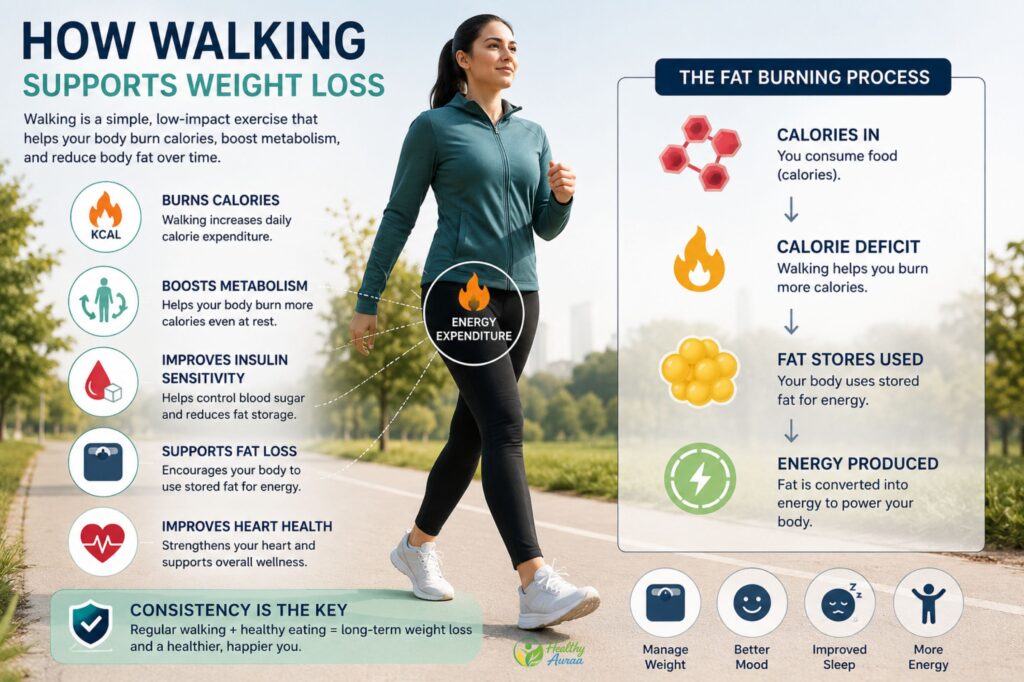
Walking helps weight loss primarily by increasing your daily energy expenditure. When your body burns more calories than it consumes, it begins to use stored fat for energy.
This is called a calorie deficit, and it is the foundation of all fat loss.
How walking supports fat loss:
- Increases daily calorie burn
- Activates fat metabolism
- Improves insulin sensitivity
- Reduces belly fat over time
- Boosts cardiovascular health
Walking is especially powerful because it does not feel like “exercise” for most people, making it easier to stay consistent.
Science Behind Step Counting

Step counting is a modern way of measuring daily physical activity. Research shows that people who walk more steps per day generally have:
- Lower body fat
- Better heart health
- Lower risk of obesity
- Improved metabolic health
However, step count alone is not everything. Two people with the same steps can burn different calories depending on:
- Speed
- Weight
- Stride length
- Terrain
That is why experts now focus on step range + intensity, not just a fixed number like 10,000.
Ideal Daily Step Targets for Weight Loss
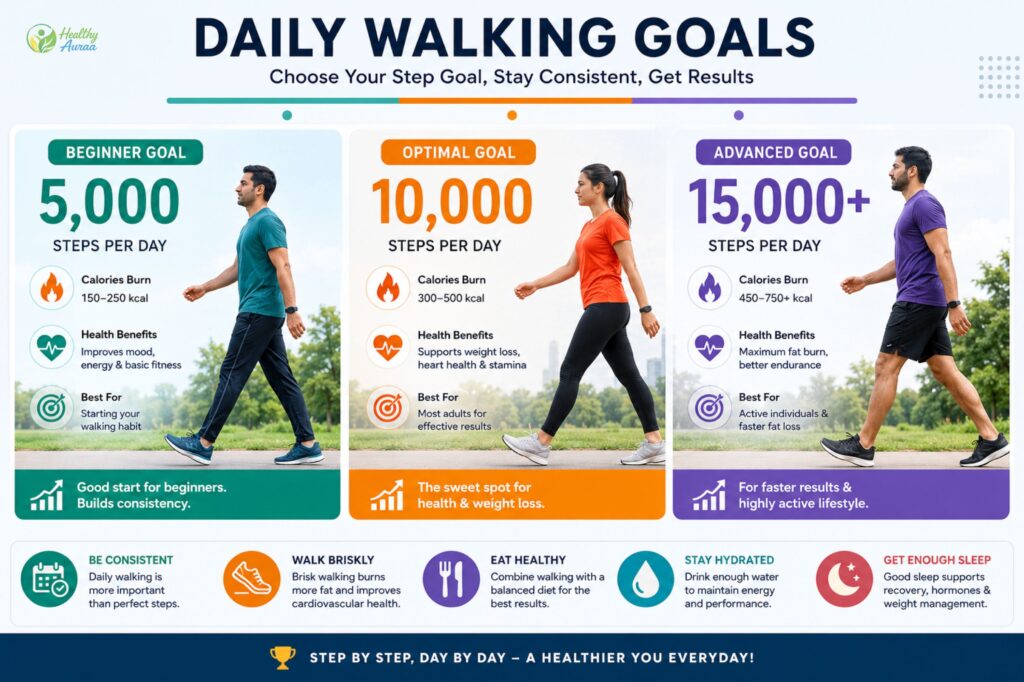
There is no universal number, but research and fitness guidelines suggest these ranges:
Beginners (Low activity)
- 4,000 – 6,000 steps/day
- Good for starting habit
- Mild calorie burn increase
Understanding how many steps a day to lose weight is the first step toward building a sustainable walking routine.
Moderate weight loss
- 7,000 – 10,000 steps/day
- Most effective “fat loss zone” for average adults
- Sustainable long-term
Faster fat loss
- 10,000 – 15,000 steps/day
- Higher calorie burn
- Requires consistency + diet control
Very active level
- 15,000+ steps/day
- Used by athletes or highly active individuals
The key insight:
You don’t need extreme steps. You need consistent moderate-high activity + calorie control.
Why 10,000 Steps Became Popular

Many people think 10,000 steps is a scientific rule, but it is actually not.
It originated from a Japanese pedometer marketing campaign in the 1960s.
However, modern research shows:
- Around 7,000–10,000 steps is linked with better health outcomes
- Weight loss benefits appear above ~8,000 steps/day
- More steps = better results (but diminishing returns after a point)
So 10,000 is not a magic number — it is a useful benchmark.
Calories Burned by Walking
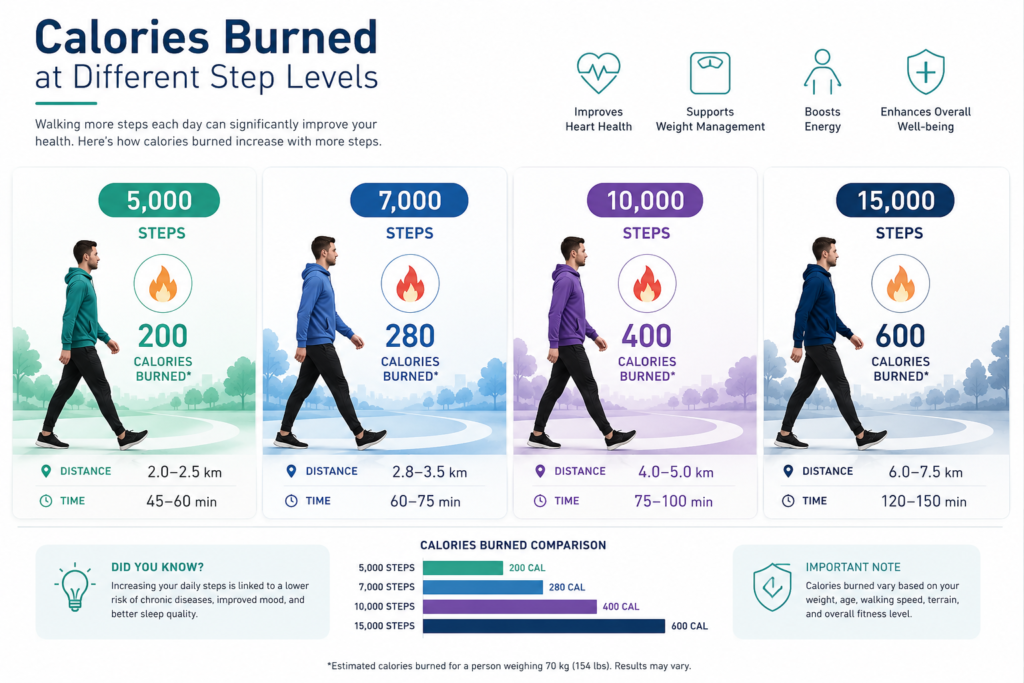
Calories burned depend on your body weight and speed.
Approximate estimates:
- 5,000 steps: 150–250 calories
- 7,000 steps: 200–350 calories
- 10,000 steps: 300–500 calories
- 15,000 steps: 450–750 calories
Example:
A 70 kg person walking 10,000 steps may burn around 350–450 calories, depending on pace.
This is important because:
Even a 300–500 calorie daily deficit leads to noticeable fat loss over time.
Factors That Change Fat Burn
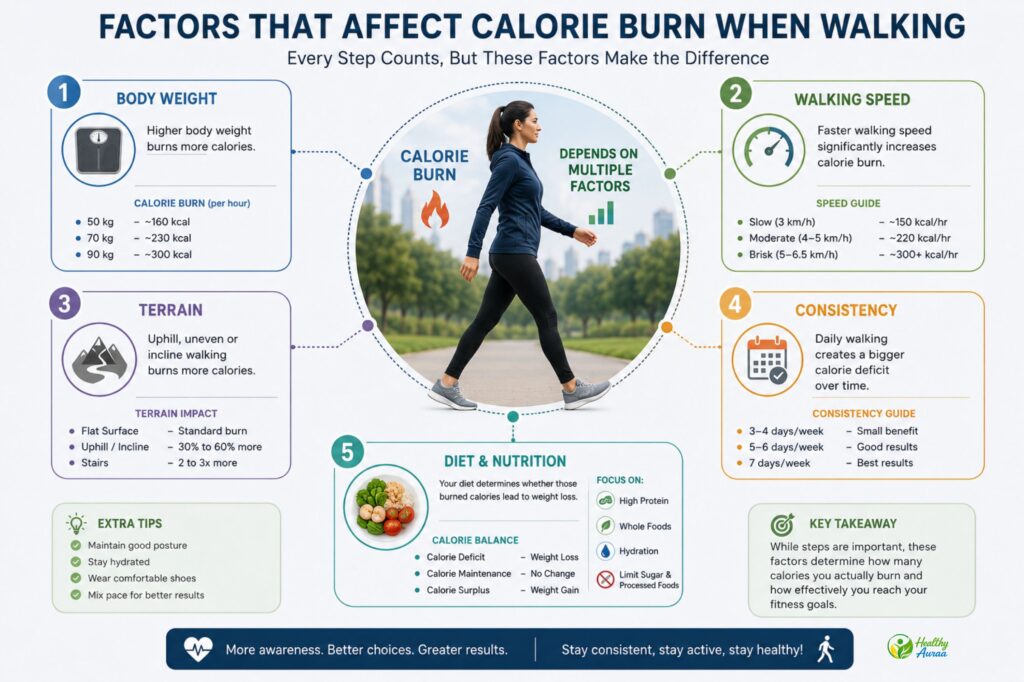
Walking results are not the same for everyone. Several factors influence fat loss:
1. Body weight
Heavier individuals burn more calories.
2. Walking speed
Brisk walking burns significantly more fat.
3. Terrain
- Flat surface = moderate burn
- Uphill/stairs = high burn
4. Consistency
Daily walking is more important than occasional long walks.
5. Diet
Without calorie control, walking alone may not lead to weight loss
Importance of Walking Speed (Very Important for Fat Loss)
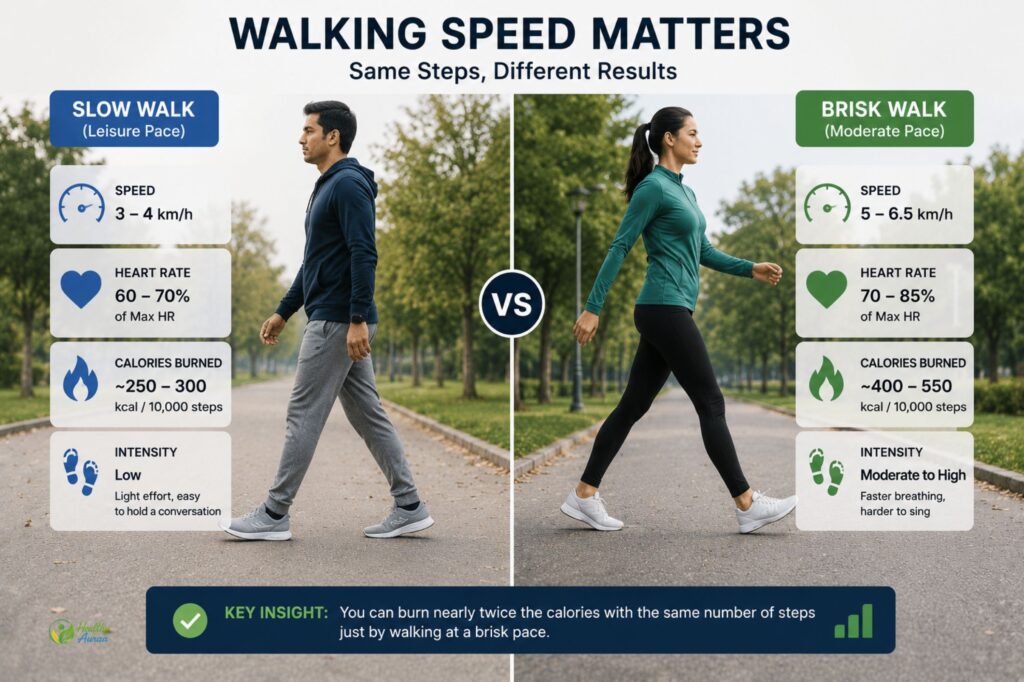
Most people focus only on steps, but walking speed (pace) can change fat loss results dramatically.
Two people may both walk 10,000 steps, but:
- One walks slowly → low calorie burn
- One walks briskly → high calorie burn
- Brisk Walking (Fat-Burning Zone)
Brisk walking means:
- You are slightly out of breath
- You can still talk, but not sing
- Heart rate is elevated
Typical speed:
- 5 to 6.5 km/h
Calories difference example (same 10,000 steps):
- Slow walk: ~250–300 calories
- Brisk walk: ~400–550 calories
That is almost double fat burn without increasing steps.
Walking Intensity vs Step Count (What Matters More?)
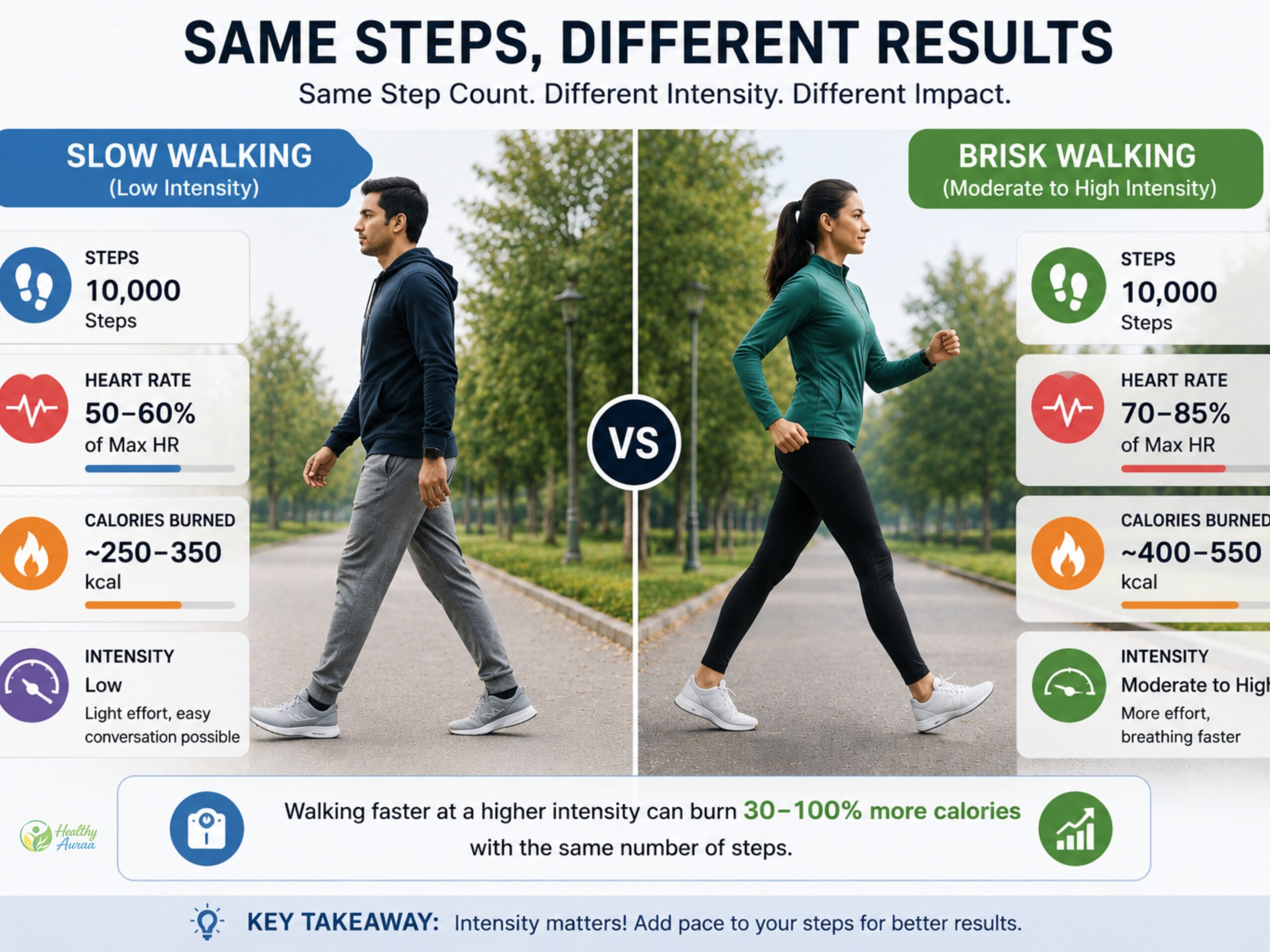
A major fitness truth:
“Steps matter, but intensity matters more.”
Comparison:
| Factor | Low Impact | High Impact |
| Steps | Same | Same |
| Speed | Slow | Brisk |
| Fat Burn | Low | High |
| Weight Loss | Slow | Faster |
Key Insight:
If your goal is weight loss, then:
- 8,000 brisk steps > 12,000 slow steps
10,000 Steps Transformation Timeline (Realistic Results)
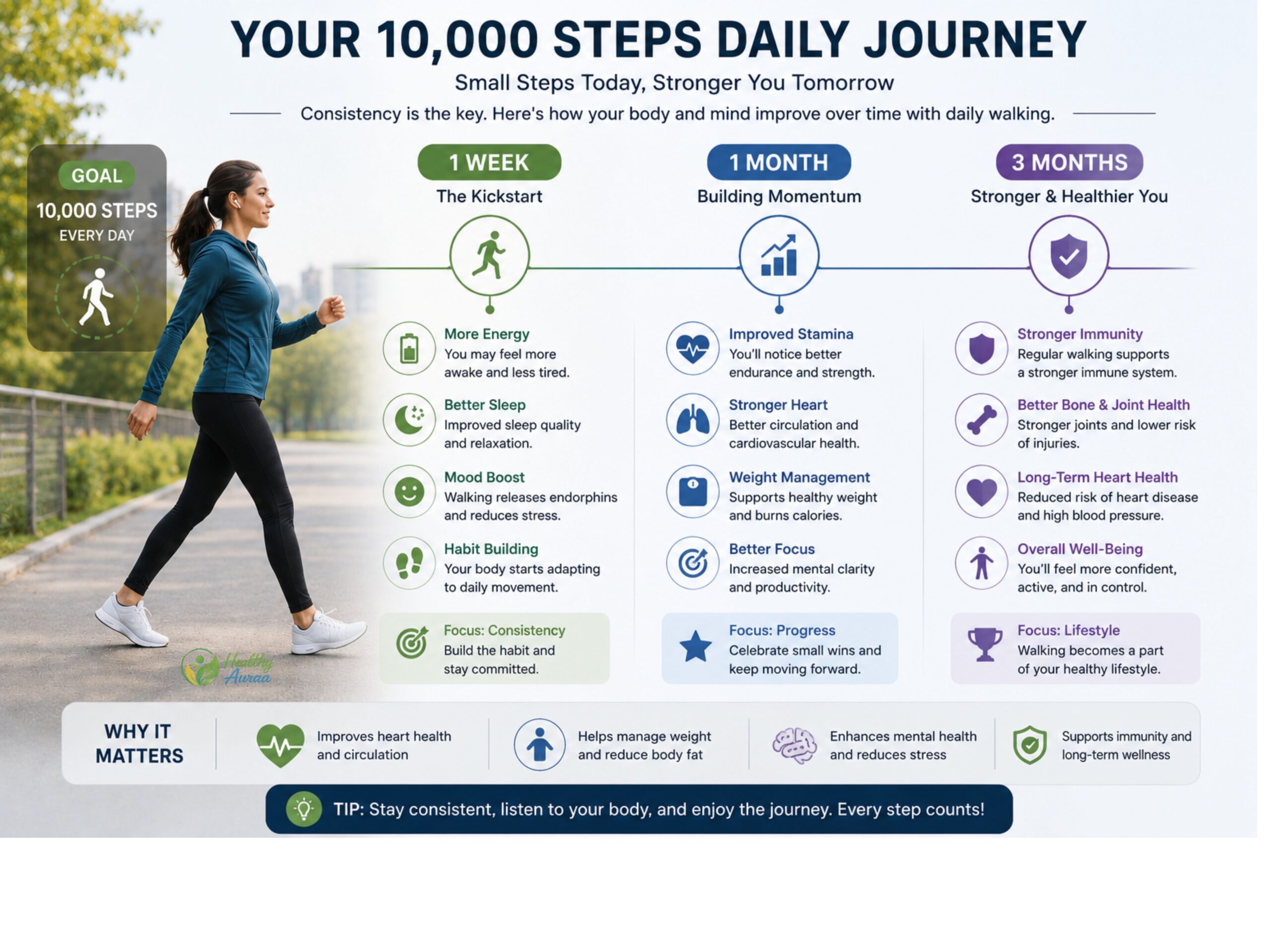
Let’s understand what actually happens when someone consistently walks 10,000 steps per day.
Week 1–2
- Increased energy
- Reduced bloating
- Slight calorie deficit starts
Week 3–4
- Noticeable weight fluctuation
- Better digestion
- Improved stamina
Week 5–8
- Visible fat reduction
- Waist size starts decreasing
- Better mood & sleep
After 2–3 months
- Sustainable fat loss
- Improved cardiovascular health
- Higher metabolic efficiency
Important:
Walking is slow but long-term powerful.
4-Week Walking Plan: How Many Steps a Day to Lose Weight
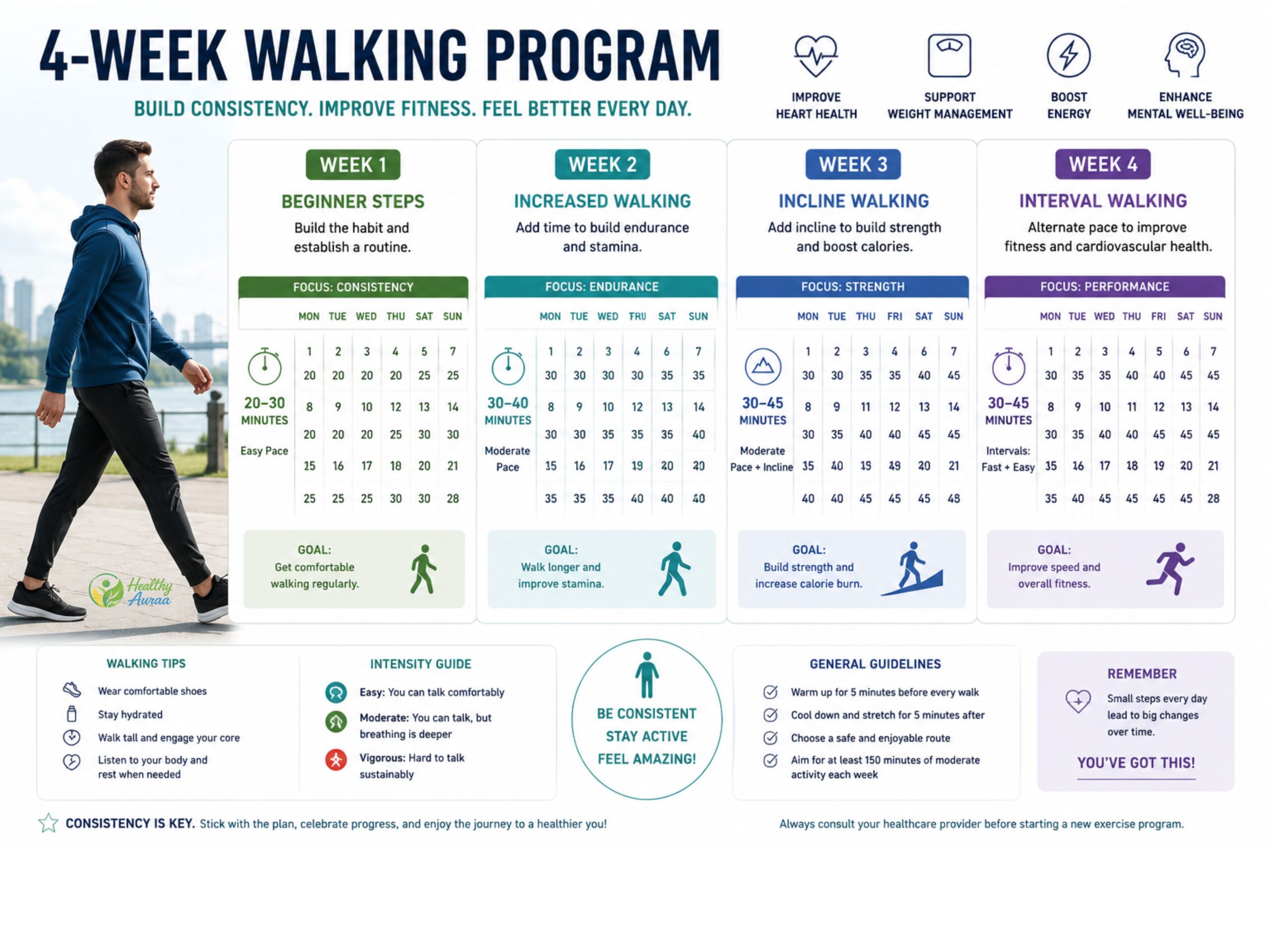
This plan is designed for beginners to intermediate users.
Week 1
- 5,000–6,000 steps/day
- 10 min brisk walk included
Week 2
- 6,500–8,000 steps/day
- Add 15 min brisk walking
Week 3
- 8,000–10,000 steps/day
- Add incline walking or stairs
Week 4
- 10,000–12,000 steps/day
- Add interval walking (fast + slow)
Belly Fat Reduction: What Science Says
Walking does not directly “target belly fat”, but it reduces overall body fat, including abdominal fat.
Why belly fat reduces:
- Calorie deficit
- Improved insulin sensitivity
- Reduced stress hormone (cortisol)
- Better metabolism
Best approach:
- Brisk walking
- Consistent daily steps
- Healthy diet (low sugar, high protein)
Does Walking 10,000 Steps Really Work?
Yes — but only under certain conditions:
It works when:
- You maintain calorie deficit
- You walk consistently
- You include brisk walking
It does NOT work when:
- You overeat after walking
- You walk slowly only
- You are inconsistent
Walking is a support tool, not a magic solution.
Realistic Weight Loss Expectation
Let’s be honest and science-based.
If you walk:
10,000 steps daily + calorie control:
- 0.3 to 0.7 kg weight loss per week
15,000 steps daily + diet control:
- 0.5 to 1 kg per week (varies)
No diet control:
- Very slow or no visible change
How Long Should You Walk Daily?
Time depends on pace:
- 5,000 steps → ~40–50 minutes
- 10,000 steps → ~75–100 minutes
- 15,000 steps → ~120–150 minutes
You don’t need all at once:
Split into 2–3 sessions:
- Morning walk
- After lunch
- Evening walk
Common Mistakes People Make
❌ Mistake 1: Only counting steps
Ignoring diet
❌ Mistake 2: Slow walking only
Low calorie burn
❌ Mistake 3: Weekend-only walking
No consistency
❌ Mistake 4: Expecting fast results
Walking is gradual
Science-Based Truth About Weight Loss
The real formula is simple:
Weight loss = Calorie deficit + consistent movement
Walking helps create the movement part, but food controls results more strongly.
How Many Steps a Day Is Healthy? (Science Perspective)
Weight loss is not the only goal of walking. General health guidelines show that even moderate walking improves long-term health outcomes.
General Health Range:
- 6,000–8,000 steps/day → basic health maintenance
- 8,000–10,000 steps/day → improved fitness + fat control
- 10,000–12,000+ steps/day → active lifestyle
Key insight:
Even if weight loss is slow, walking significantly reduces risk of:
- Heart disease
- Type 2 diabetes
- High blood pressure
- Metabolic syndrome
How Many Steps to Lose a Pound?
To lose 1 pound (0.45 kg) of fat, you need approximately:
3,500 calories deficit
Approx walking breakdown:
- 10,000 steps = ~300–500 calories
- So:
- 7–12 days of consistent walking = ~1 pound fat loss (with diet control)
Without diet control, this timeline increases significantly.
Steps to Miles & KM (Practical Conversion Guide)
Step length varies, but average estimates:
Basic Conversions:
- 1,000 steps ≈ 0.7–0.8 km
- 2,000 steps ≈ 1.4–1.6 km
- 5,000 steps ≈ 3.5–4 km
- 10,000 steps ≈ 7–8 km
- 15,000 steps ≈ 10–12 km
Example:
If you walk 12,000 steps/day, you cover:
- ~9 km distance
- ~450–650 calories burned (depending on weight)
Advanced Fat-Burning Walking Methods
Incline Walking
Walking uphill increases calorie burn by 30–60%.
Benefits:
- More leg activation
- Faster fat loss
- Better endurance
Interval Walking
Alternate:
- 1 min fast walk
- 2 min normal walk
👉 Improves metabolism significantly.
🔥 Rucking (Weighted Walking)
Walking with a light backpack:
- Burns 2–3x more calories
- Builds strength + endurance
- Advanced fat-loss method
Walking vs Other Exercises
| Activity | Calorie Burn | Sustainability |
| Walking | Moderate | Very High |
| Running | High | Medium |
| Cycling | High | Medium |
| Gym workouts | High | Low-Medium consistency |
Walking wins in long-term consistency.
Walking for Different Age Groups
Young Adults
- 8,000–12,000 steps ideal
- Faster fat loss possible
Adults (30–50)
- 7,000–10,000 steps
- Focus on consistency
Seniors
- 5,000–8,000 steps
- Focus on mobility + heart health
30-Day Walking Results (Realistic Expectation)
If you walk consistently:
Week 1
- Slight energy boost
- Better digestion
Week 2
- Mild weight drop (0.5–1 kg)
Week 3
- Waist reduction begins
Week 4
- Visible fat loss
- Improved stamina
👉 Total loss: 1.5–3 kg possible (with diet control)
24. Expert Tips for Faster Results
✔ Walk after meals (boost digestion + fat burn)
✔ Drink enough water
✔ Maintain calorie deficit
✔ Use brisk walking intervals
✔ Track steps daily
✔ Avoid long sitting hours
Common Questions (Advanced FAQs)
Q1: Is 10,000 steps enough to lose weight?
Yes, if combined with a calorie deficit and brisk walking.
Q2: Can I lose belly fat with walking only?
Yes, but overall fat loss happens first.
Q3: Is morning or evening walk better?
Both work equally—consistency matters more.
Q4: How fast should I walk?
Brisk pace (5–6 km/h) is ideal.
Q5: How long before I see results?
2–4 weeks for early changes.
KEY TAKEAWAYS
- 7,000–12,000 steps/day is ideal for weight loss
- 10,000 steps is a strong but not mandatory target
- Brisk walking burns significantly more fat
- Diet is essential for real results
- Consistency matters more than perfection
- Walking is one of the most sustainable fat-loss tools
REFERENCES (AUTHORITY BASED)
- World Health Organization (WHO) Physical Activity Guidelines
- Centers for Disease Control and Prevention (CDC)
- National Institutes of Health (NIH)
- American Heart Association (AHA)
- Peer-reviewed studies on NEAT & energy expenditure
The real secret is not extreme effort, but consistent movement every single day.
Walking Physiology: Body Fat Actually Burn Kaise Hoti Hai?
How Your Body Burns Energy During Walking
When you walk, your body initiates a series of biological processes that increase energy production to fuel your muscles. Walking may seem simple, but it activates multiple metabolic pathways that contribute to calorie burning and, over time, weight loss.
Here’s what happens inside your body during a walk:
- Your muscles require more energy.
As soon as you start walking, your leg, core, and stabilizing muscles contract repeatedly. This increased muscle activity raises your body’s energy demand. - Your body uses stored glucose first.
During the early minutes of walking, your body primarily relies on glucose (carbohydrates) stored in your blood and muscles as a quick source of energy. - Fat becomes a larger fuel source during longer walks.
As your walk continues—typically after about 20 to 30 minutes of continuous moderate-intensity walking—your body gradually shifts to using a higher proportion of stored fat for energy. While fat contributes to energy production from the beginning of exercise, its relative contribution generally increases during longer-duration, moderate-intensity activity. - Fat is converted into usable energy (ATP).
Fatty acids released from fat tissue are transported to muscle cells, where they are broken down through metabolic processes to produce adenosine triphosphate (ATP), the body’s primary energy currency that powers muscle movement.
Key takeaway:
Longer, consistent walks encourage your body to rely more on fat as a fuel source, making regular moderate-intensity walking an effective strategy for supporting long-term fat loss when combined with a calorie-controlled diet.
Why Walking Burns Fat Slowly—But Effectively
Walking is considered a moderate-intensity, low-impact aerobic exercise. Although it doesn’t burn calories as quickly as high-intensity workouts like running or HIIT, it offers several advantages that make it one of the most sustainable forms of exercise for weight management.
Regular walking can:
- Increase fat oxidation (your body’s ability to use fat as fuel)
- Improve insulin sensitivity, helping your body regulate blood sugar more efficiently
- Lower stress hormone levels, including cortisol, which may help reduce stress-related overeating
- Support a healthy metabolism through consistent daily physical activity
- Be performed frequently with a lower risk of injury than many high-impact exercises
Comparison of Walking vs. Other Exercises
| Exercise Type | Fat-Burning Rate | Long-Term Sustainability |
| Walking | Moderate and steady | Very High |
| Running | High | Moderate |
| HIIT (High-Intensity Interval Training) | Very High | Moderate to Low |
While running and HIIT can burn more calories per minute, many people find it difficult to perform these workouts consistently. Walking, on the other hand, is easier to maintain over months and years, which often makes it more effective for achieving and maintaining long-term weight loss.
Key takeaway:
Walking may burn fat more gradually than vigorous exercise, but its safety, accessibility, and sustainability make it one of the most effective long-term strategies for weight management.
The NEAT Factor: The Hidden Secret Behind Weight Loss
NEAT stands for Non-Exercise Activity Thermogenesis. It refers to the calories your body burns through everyday movement outside of structured exercise.
Examples of NEAT include:
- Walking around your home or office
- Taking the stairs instead of the elevator
- Parking farther away from your destination
- Household chores such as vacuuming, cleaning, or gardening
- Carrying groceries
- Standing instead of sitting
- Walking while talking on the phone
- Playing with children or pets
Although each activity burns only a small number of calories, these movements accumulate throughout the day and can make a significant difference in your total daily energy expenditure.
Research suggests that NEAT can vary dramatically between individuals and may account for hundreds of additional calories burned per day, depending on a person’s lifestyle and activity level.
Why NEAT matters for weight loss
Increasing your daily movement—not just your scheduled workouts—can help:
- Create a larger calorie deficit
- Reduce prolonged sitting time
- Improve metabolic health
- Support long-term weight management
- Make it easier to maintain weight loss after reaching your goal
- Walking
- Standing
- House chores
- Moving around
Interesting fact:
NEAT can burn:
👉 300–800 extra calories/day
Why Step Count Alone Is Not Enough
Two people:
- Person A: 10,000 slow steps
- Person B: 7,000 brisk steps
Person B may lose more weight
Why?
Because:
- Heart rate zone matters
- Muscle activation matters
- Oxygen demand matters
Walking Heart Rate Zones (Fat Burning Zone)
Best fat burning zone:
- 50% – 70% of max heart rate
Simple test:
If you can talk but not sing → you are in fat burning zone
Advanced 12-Week Walking Transformation Plan
Phase 1 (Weeks 1–4)
- 6,000–8,000 steps/day
- Light brisk walking
Phase 2 (Weeks 5–8)
- 8,000–10,000 steps/day
- Add incline walking
Phase 3 (Weeks 9–12)
- 10,000–15,000 steps/day
- Add interval walking
Walking Plateaus (Why Weight Loss Stops)
Sometimes weight loss stop ho jata hai:
Reasons:
- Body adaptation
- Same routine repeat
- Calorie intake increase
- Water retention
Solution:
- Increase steps
- Change walking speed
- Add incline/stairs
Step Counting Accuracy Issues
Not all step counters are 100% accurate:
Errors come from:
- Wrist movement
- Phone placement
- Stride variation
Real error margin: 5–15%
Weather Impact on Walking
Cold weather:
- More calorie burn
- Higher body effort
Hot weather:
- Faster fatigue
- Lower duration
Walking and Hormonal Health
Walking helps regulate:
- Insulin (blood sugar control)
- Cortisol (stress hormone)
- Leptin (hunger control)
This is why walking reduces overeating tendencies
Gender Differences in Step Burn
Men:
- Higher muscle mass
- Higher calorie burn
Women:
- Slightly lower calorie burn
- But better fat oxidation efficiency
Walking After Meals (Very Powerful Habit)
Post-meal walking:
- Reduces blood sugar spikes
- Improves digestion
- Prevents fat storage
Ideal timing:
- 10–15 minutes after eating
Walking and Sleep Quality
Daily walking:
- Improves deep sleep
- Reduces insomnia
- Balances circadian rhythm
Better sleep = better weight loss
Realistic Weight Loss Timeline (Deep Science Model)
| Time | Expected Result |
| 1 week | Energy boost |
| 2 weeks | Water weight loss |
| 1 month | Visible changes |
| 2 months | Fat loss noticeable |
| 3–6 months | Major transformation |
Final Scientific Conclusion (Deep Layer)
Walking is not just exercise — it is a metabolic regulator.
It works because it:
- Maintains calorie deficit
- Improves metabolic flexibility
- Reduces insulin resistance
- Supports fat oxidation
Long-term walking = sustainable fat loss system