
Why Is My Blood Pressure High in the Morning? Causes, Risks, and What You Can Do
Wondering why is your blood pressure high in the morning? Learn the common causes, health risks, and simple ways to manage morning blood pressure naturally.
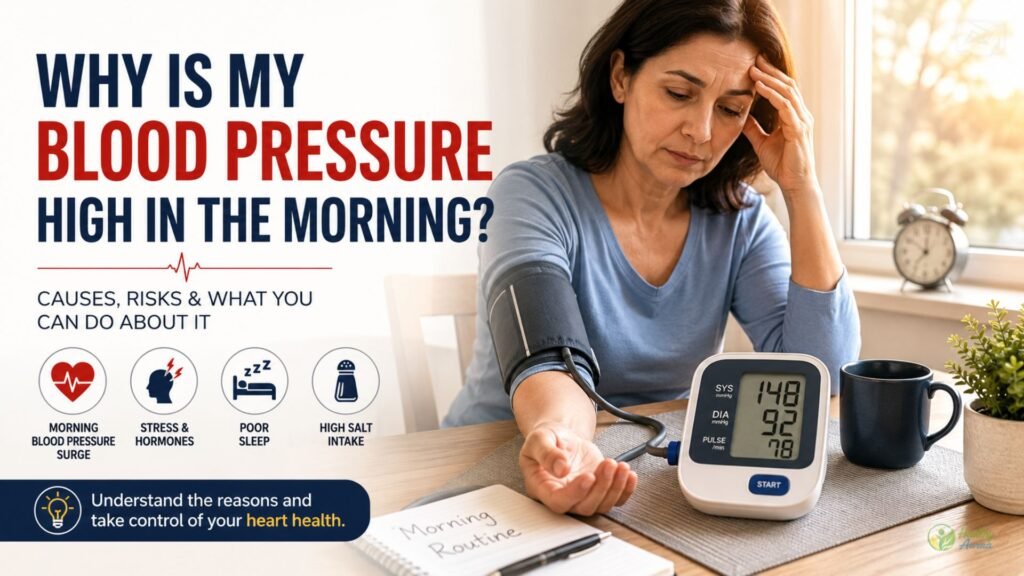
Table of Contents
What Happens to Blood Pressure in the Morning?
Why Is My Blood Pressure High in the Morning?
Common Causes of High Morning Blood Pressure
Why Is My Blood Pressure High in the Morning? Lifestyle Habits That Raise Morning Blood Pressure
Who Is Most Likely to Have High Blood Pressure in the Morning?
Is High Morning Blood Pressure Dangerous?
How to Lower High Blood Pressure in the Morning Naturally
Why Is My Blood Pressure High in the Morning Even with Medication?
When Should You See a Doctor?
Final Thoughts
Frequently Asked Questions
Why Is My Blood Pressure High in the Morning?
Have you ever checked your blood pressure shortly after waking up and noticed that it was higher than expected? If so, you are not alone. Many people ask, “why is my blood pressure high in the morning?” Morning blood pressure changes are common, but in some cases, they can be a warning sign that needs attention.
Your body naturally prepares to wake up by releasing hormones that increase your heart rate and blood pressure. This process is normal. However, when morning blood pressure stays too high, it may increase the risk of heart attack, stroke, or other heart problems.
In this guide, you’ll learn why is my blood pressure high in the morning, what causes it, who is at risk, and what you can do to keep your blood pressure under control.
What Happens to Blood Pressure in the Morning?
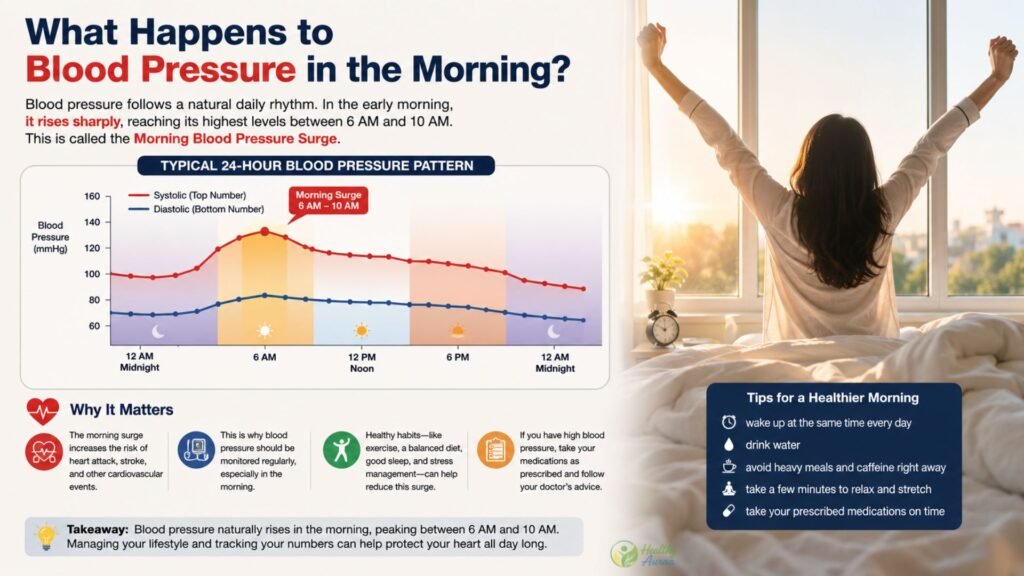
Your blood pressure follows a natural daily pattern called the circadian rhythm. It usually drops while you sleep because your body is resting. A few hours before you wake up, your brain starts releasing hormones like cortisol and adrenaline. These hormones prepare your body for the day by making your heart beat faster and narrowing your blood vessels.
Because of these changes, your blood pressure begins to rise before you even get out of bed. This is called the morning blood pressure surge, and it is a normal response in healthy people.
However, if the increase is much higher than normal, doctors may become concerned. A strong morning surge has been linked to a higher chance of heart disease and stroke, especially in older adults or people with uncontrolled high blood pressure.
Many people wonder, why is my blood pressure high in the morning when they feel perfectly fine. The truth is that high blood pressure often has no symptoms, which is why regular monitoring is important.
The good news is that understanding this natural pattern can help you recognize when your readings are normal and when they may need medical attention.
Why Is My Blood Pressure High in the Morning?
Several factors can cause your blood pressure to be higher when you wake up. In many cases, more than one reason is involved.
The body’s natural hormone release is one of the biggest causes. As morning approaches, stress hormones increase, making the heart pump harder and causing blood vessels to tighten. This naturally raises blood pressure.
Some people experience high morning readings because their blood pressure medication wears off overnight. If the medicine does not last for a full 24 hours, blood pressure may rise before the next dose.
Poor sleep is another common reason. Sleep apnea, frequent waking, and not getting enough sleep can all increase morning blood pressure. Sleep disorders place extra stress on the heart and blood vessels.
Lifestyle habits also play a role. Eating too much salt, drinking alcohol at night, smoking, being overweight, or experiencing high stress can all contribute to morning hypertension.
If you regularly ask yourself, why is my blood pressure high in the morning, it may be worth discussing your medications, sleep quality, and lifestyle habits with your healthcare provider.
Common Causes of High Morning Blood Pressure
There are many reasons why your morning blood pressure may be higher than expected.
One common cause is high stress levels. Emotional stress causes the body to release hormones that temporarily raise blood pressure. If stress becomes chronic, morning readings may remain elevated.
Another cause is sleep apnea. People with untreated sleep apnea often stop breathing for short periods during sleep, reducing oxygen levels and increasing blood pressure.
Some medications can also affect blood pressure. Missing doses, taking medicines at the wrong time, or certain over-the-counter drugs may contribute to higher morning readings.
Poor eating habits also matter. A diet high in sodium causes the body to retain fluid, making the heart work harder.
Lack of physical activity reduces heart health over time and can contribute to persistent hypertension.
Understanding these causes can help answer the question, why is my blood pressure high in the morning, and guide you toward healthier daily habits.
Lifestyle Habits That Raise Morning Blood Pressure
Many daily habits can silently increase your blood pressure overnight.
- Eating salty dinners
- Drinking alcohol before bed
- Smoking cigarettes
- Sleeping less than seven hours
- High stress and anxiety
- Skipping blood pressure medicine
- Lack of exercise
- Obesity
Making small improvements in these areas often leads to better morning blood pressure readings.
Who Is Most Likely to Have High Blood Pressure in the Morning?
Although anyone can experience a morning blood pressure surge, some people are at greater risk.
Older adults are more likely to have stiff arteries, making blood pressure rise more sharply after waking.
People with diabetes often experience changes in blood vessel function that increase hypertension risk.
Individuals with chronic kidney disease frequently develop uncontrolled blood pressure because the kidneys help regulate fluid balance.
Those who already have hypertension may notice higher morning readings if their medication schedule needs adjustment.
People with obesity or sleep apnea are also more likely to develop morning hypertension because both conditions increase stress on the cardiovascular system.
If several of these risk factors apply to you, it’s easier to understand why is my blood pressure high in the morning and why regular monitoring is important.
Is High Morning Blood Pressure Dangerous?
A temporary increase after waking is usually normal. However, consistently high morning blood pressure can increase the risk of serious health problems.
Research shows that uncontrolled morning hypertension is linked to:
- Heart attack
- Stroke
- Heart failure
- Kidney disease
- Damage to blood vessels
- Vision problems
Morning hours are already the time when many heart attacks and strokes occur. If blood pressure rises too much during this period, the risk becomes even greater.
This is why doctors often pay close attention to morning blood pressure readings.
How to Lower High Blood Pressure in the Morning Naturally
Fortunately, many healthy habits can reduce morning blood pressure.
Exercise regularly for at least 30 minutes most days of the week. Walking, cycling, and swimming all improve heart health.
Reduce salt intake by choosing fresh foods instead of processed meals.
Maintain a healthy weight because even modest weight loss can lower blood pressure.
Sleep for seven to nine hours each night.
Manage stress through meditation, deep breathing, or yoga.
Limit alcohol and avoid smoking.
Take blood pressure medications exactly as prescribed. Never change your medication schedule without consulting your doctor.
These simple lifestyle changes often improve overall blood pressure control.
Why Is My Blood Pressure High in the Morning Even with Medication?
Some people continue asking, why is my blood pressure high in the morning, even after taking medication every day.
Several reasons may explain this.
Your medication may not last through the night.
The dose may need adjustment.
You may have resistant hypertension that requires more than one medicine.
Poor sleep or sleep apnea can continue raising blood pressure despite medication.
Certain medications such as decongestants, NSAID pain relievers, and steroids may also interfere with blood pressure control.
If your morning readings stay consistently high, speak with your healthcare provider instead of adjusting medications yourself.
When Should You See a Doctor?
You should contact your healthcare provider if your blood pressure is consistently above 130/80 mmHg, especially in the morning.
Seek emergency medical care immediately if your blood pressure is above 180/120 mmHg and you experience:
- Chest pain
- Severe headache
- Difficulty breathing
- Blurred vision
- Weakness on one side
- Trouble speaking
These symptoms may indicate a medical emergency.
Medical References
This article is based on information provided by leading medical and public health organizations:
American Heart Association (AHA): https://www.heart.org/en/health-topics/high-blood-pressure
Centers for Disease Control and Prevention (CDC): https://www.cdc.gov/high-blood-pressure/
World Health Organization (WHO): https://www.who.int/news-room/fact-sheets/detail/hypertension
National Heart, Lung, and Blood Institute (NHLBI): https://www.nhlbi.nih.gov/health/high-blood-pressure
Mayo Clinic: https://www.mayoclinic.org/diseases-conditions/high-blood-pressure
National Health Service (NHS): https://www.nhs.uk/conditions/high-blood-pressure-hypertension/
MedlinePlus: https://medlineplus.gov/highbloodpressure.html
Johns Hopkins Medicine: https://www.hopkinsmedicine.org/health/conditions-and-diseases/high-blood-pressure-hypertension
Cleveland Clinic: https://health.clevelandclinic.org/high-blood-pressure
National Institute on Aging (NIA): https://www.nia.nih.gov/health/high-blood-pressure
Medical Disclaimer
The information provided in this article is for educational and informational purposes only and is not intended as medical advice. It should not be used as a substitute for professional diagnosis, treatment, or medical care. Always consult a licensed healthcare provider regarding any questions about your health, medications, or treatment options.
Frequently Asked Questions
Why is my blood pressure high in the morning but normal later?
Morning hormones naturally increase blood pressure after waking. However, consistently high readings may also indicate uncontrolled hypertension or medication timing issues.
Can dehydration raise blood pressure in the morning?
Yes. Dehydration can affect blood volume and may temporarily increase blood pressure in some people.
Should I measure my blood pressure immediately after waking up?
Most experts recommend measuring it within one hour of waking, after using the bathroom and before eating or taking medication.
Does coffee increase morning blood pressure?
Yes. Caffeine may temporarily raise blood pressure, especially in people who do not consume it regularly.
Can stress cause high morning blood pressure?
Yes. Stress hormones released before waking can increase blood pressure, particularly if you experience chronic stress.
Final Thoughts
If you’ve been wondering why is my blood pressure high in the morning, remember that a small increase is part of your body’s normal wake-up process. However, consistently high morning readings should never be ignored. Factors such as medication timing, poor sleep, stress, excess salt, obesity, and underlying medical conditions can all contribute.
By monitoring your blood pressure regularly, following a heart-healthy lifestyle, getting quality sleep, and working closely with your healthcare provider, you can reduce your risk of serious complications and keep your blood pressure under better control. If your morning readings remain high despite healthy habits, schedule a medical evaluation to identify the underlying cause and receive the most appropriate treatment.