
Mediterranean Diet Meal Plan: The Ultimate 7-Day Guide for Beginners, Weight Loss, and Long-Term Health
Table of Contents
What Is the Mediterranean Diet?
Health Benefits of the Mediterranean Diet
Mediterranean Diet Food List
Foods to Limit on the Mediterranean Diet
Before You Begin This Mediterranean Meal Plan
Important Things to Know About This Meal Plan
Your 7-Day Mediterranean Diet Meal Plan
Day 1: Mediterranean Meal Plan
Day 2: Mediterranean Meal Plan
Day 3: Mediterranean Meal Plan
Day 4: Mediterranean Meal Plan
Day 5: Mediterranean Meal Plan
Day 6: Mediterranean Meal Plan
Day 7: Mediterranean Meal Plan
How to Adapt the Mediterranean Diet to Your Lifestyle
Mediterranean Diet for Heart Health and Diabetes
Frequently Asked Questions About the Mediterranean Diet
Mediterranean Diet Meal Plan: The Ultimate 7-Day Guide for Beginners, Weight Loss, and Long-Term Health
The Mediterranean diet meal plan continues to dominate health rankings across the United States. Year after year, experts from Harvard Health, Mayo Clinic, and the NIH recognize this eating pattern for its practicality and science-backed benefits. Unlike restrictive diets that feel like a sprint, the Mediterranean diet resembles a lifelong journey. It encourages balance, enjoyment, and nourishment.
Many Americans are looking for a sustainable way to eat. They want better energy levels, improved sleep, and support for long-term wellness. That is where the 7-day Mediterranean diet meal plan shines. It focuses on Fresh produce, Whole grains, Lean protein, and Healthy fats while reducing highly processed foods.
Research has linked the Mediterranean-style diet with Reduced risk of heart disease, Lower LDL cholesterol, Healthy blood pressure levels, and All-cause mortality reduction. Additionally, studies suggest potential benefits for Mental and cognitive health and Gut microbiome health.
| Trusted Source | Area of Expertise |
| NIH | Nutrition Research |
| CDC | Chronic Disease Prevention |
| Harvard Health | Lifestyle Medicine |
| Mayo Clinic | Preventive Health |
| Cleveland Clinic | Heart Health |
| Johns Hopkins | Brain Health |
What Is the Mediterranean Diet?
The Mediterranean diet meal plan originated in countries bordering the Mediterranean Sea. Places like Greece, Italy, and Spain inspired this approach to eating. People in these regions traditionally consumed vegetables, legumes, fish, and olive oil while remaining physically active throughout their lives.
Instead of focusing on calorie counting, the Mediterranean eating plan emphasizes quality. Imagine your plate as a colorful painting. Every ingredient serves a purpose. Leafy greens, Tomatoes, Broccoli, and Avocado add vitamins and fiber. Meanwhile, Salmon, Seafood, and Greek yogurt contribute protein and essential nutrients.
At its core, this is a Whole food diet. It promotes Low processed food intake, Added sugar reduction, and choosing Refined grains alternatives such as Quinoa, Farro, and Bulgur wheat. Because of this flexibility, many healthcare professionals recommend the Mediterranean diet for beginners.
The eating style also supports a broader Mediterranean lifestyle. Meals are often shared with family and friends. People walk regularly and prioritize rest. This combination of food and lifestyle habits explains why the Mediterranean region includes several communities associated with the Blue Zones diet concept.
Key Features of the Mediterranean Diet
| Feature | Example |
| Healthy Fat | Extra virgin olive oil |
| Protein | Chicken, Fatty fish, Eggs |
| Fiber | Chickpeas, Lentils, Oats |
| Produce | Strawberries, Oranges, Pears |
| Activity | Daily physical activity |
Health Benefits of the Mediterranean Diet
Scientists have spent decades studying the Mediterranean diet health benefits. The results are remarkable. According to Harvard Health, people who follow a consistent Mediterranean diet meal plan often experience improvements in cardiovascular markers.
One significant advantage is the potential for Reduced risk of heart disease. The diet naturally includes Heart-healthy omega-3s from Fatty fish such as Salmon and Shellfish. These foods contain Omega-3 fatty acids, which play an important role in supporting heart function.
Researchers have also examined the relationship between the Mediterranean diet for diabetes and blood sugar management. Early findings suggest Insulin sensitivity improvement and support for the Prevention of type 2 diabetes when combined with regular exercise and physician guidance.
Brain health represents another exciting area of study. Johns Hopkins has highlighted associations between Mediterranean eating patterns and Cognitive decline prevention, Dementia risk reduction, and possible Alzheimer’s disease prevention. While no diet guarantees perfect health, food choices can influence long-term outcomes.
Finally, many readers seek the Mediterranean diet meal plan for weight loss. Because meals contain High-fiber foods and protein, they tend to promote satiety. People often feel satisfied without obsessing over calories. Healthy habits work best when they feel effortless.
“Food can be one of your most powerful daily decisions. Small choices repeated over time often produce extraordinary results.”
Mediterranean Diet Food List
Building a successful Mediterranean diet food list begins with your shopping cart. Think of your kitchen as a toolbox. The better the tools, the easier the work becomes.
Vegetables form the foundation of the plan. Popular choices include Spinach, Kale, Bell peppers, Eggplant, Sweet potatoes, Zucchini, and Artichokes. These foods provide fiber, antioxidants, and important vitamins.
Fruits bring natural sweetness. Many followers enjoy Apples, Cherries, Peaches, Pomegranates, Figs, and Grapefruit. Pairing fruit with Greek yogurt creates one of the easiest Mediterranean diet breakfast ideas.
The grain and legume category offers exceptional variety. Staples include Whole grains, Couscous, Kidney beans, Cannellini beans, and Lentils. Together, these foods support a Balanced diet plan and make Healthy meal prep simple.
Healthy fats deserve special attention. The stars of the show include Extra virgin olive oil, Olives, Tahini, Walnuts, Almonds, Pistachios, and Sesame seeds. These ingredients support Healthy cholesterol levels and fit naturally into a Heart-healthy diet.
| Category | Top Choices |
| Vegetables | Kale, Broccoli, Tomatoes |
| Fruits | Strawberries, Oranges, Pears |
| Proteins | Chicken, Seafood, Eggs |
| Fats | Extra virgin olive oil, Walnuts |
| Grains | Quinoa, Oats, Farro |
Foods to Limit on the Mediterranean Diet
The beauty of the Mediterranean diet meal plan lies in moderation. Nothing is entirely forbidden. However, certain foods should remain occasional guests rather than permanent residents.
Processed foods often contain excessive sodium, added sugars, and unhealthy fats. Examples include packaged desserts, sugary cereals, and heavily processed snacks. Over time, reducing these foods supports Healthy blood pressure levels and contributes to better overall health.
Refined carbohydrates also deserve attention. White bread and sugary pastries provide quick energy but little lasting satisfaction. Replacing them with Refined grains alternatives such as Whole grains and Oats helps maintain energy throughout the day.
Sugary beverages represent another common challenge in America. Instead of soda, consider Calorie-free beverages like water, sparkling water, or unsweetened tea. These simple substitutions can significantly reduce sugar intake over several months.
Many experts also recommend limiting processed meats. Choosing Lean protein sources such as Chicken, fish, and legumes aligns more closely with a traditional Mediterranean nutrition plan.
Your 7-Day Mediterranean Diet Meal Plan
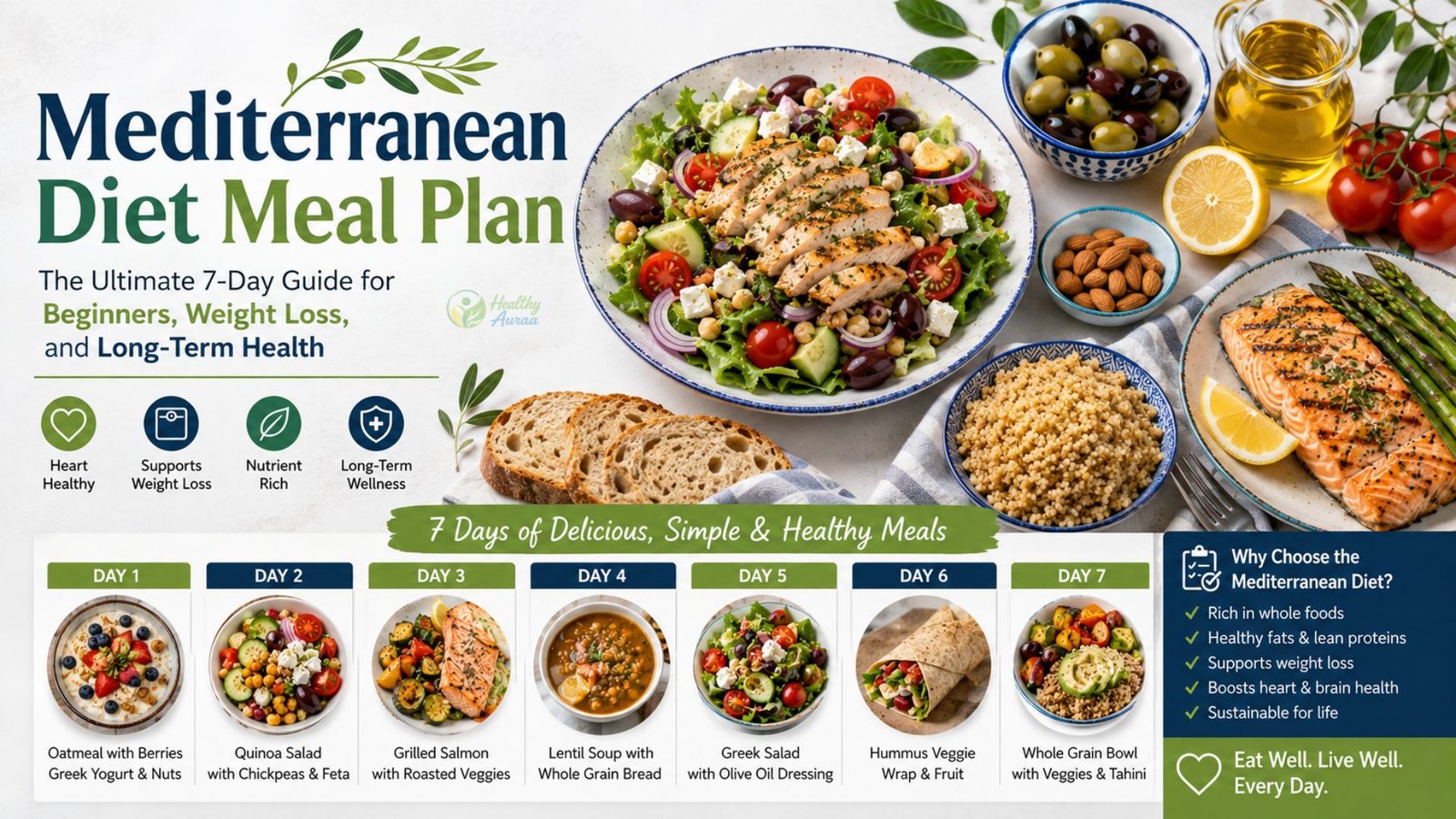
A practical 7-day Mediterranean diet meal plan makes healthy eating easier. Planning ahead removes guesswork and reduces the temptation to order fast food after a long day.
| Day | Breakfast | Lunch | Dinner |
| Monday | Greek yogurt and berries | Quinoa salad | Grilled salmon |
| Tuesday | Oatmeal | Chickpea bowl | Chicken and vegetables |
| Wednesday | Eggs and spinach | Lentil soup | Shrimp with brown rice |
| Thursday | Smoothie | Tuna salad | Baked cod |
| Friday | Avocado toast | Mediterranean wrap | Turkey meatballs |
| Saturday | Overnight oats | Grain bowl | Tofu stir-fry |
| Sunday | Cottage cheese | Feta salad | Shrimp skewers |
Day 1: Mediterranean Meal Plan
Start with Greek yogurt, Strawberries, and Walnuts. Lunch can feature Quinoa with vegetables and chickpeas. Dinner works well with grilled Salmon and roasted vegetables. This combination delivers Heart-healthy omega-3s and plenty of fiber.
Day 2: Mediterranean Meal Plan
Oatmeal topped with fruit makes an excellent breakfast. Lunch can include a Mediterranean grain bowl. Dinner may consist of grilled Chicken served alongside roasted Broccoli and sweet potatoes.
Day 3: Mediterranean Meal Plan
Begin your morning with eggs and sautéed Spinach. For lunch, enjoy lentil soup and whole-grain bread. Finish the day with shrimp and brown rice for a satisfying meal.
Day 4: Mediterranean Meal Plan
A smoothie featuring berries and yogurt provides a refreshing start. Lunch can include a salad with Feta cheese and vegetables. Dinner works beautifully with baked fish and asparagus.
Day 5: Mediterranean Meal Plan
Whole-grain toast with Avocado offers healthy fats. A chickpea salad keeps lunch light. For dinner, turkey meatballs and Farro create a hearty combination.
Day 6: Mediterranean Meal Plan
Overnight oats remain a favorite among busy professionals. Pair lunch with tuna and vegetables. Dinner can focus on tofu stir-fry with colorful produce.
Day 7: Mediterranean Meal Plan
Close the week with cottage cheese and peaches. Lunch may include a spinach salad. Dinner featuring shrimp skewers offers a delicious finale to your Nutritionist-approved meal plan.
How to Adapt the Mediterranean Diet to Your Lifestyle
Flexibility remains one of the greatest strengths of the Mediterranean diet meal plan. Whether you are a student, parent, or retiree, the principles remain the same.
Vegetarians can emphasize legumes and tofu. Seafood lovers may prioritize fish several times each week. Busy professionals often rely on Healthy meal prep to stay consistent during hectic schedules.
Technology also supports adherence. Several Mediterranean diet apps help users plan meals, track grocery lists, and discover new recipes. Likewise, readers interested in expanding their cooking skills may choose to Buy Mediterranean diet cookbook resources for additional inspiration.
For those seeking convenience, numerous companies now offer Mediterranean meal delivery services across the United States. These services can be useful during busy seasons of life.
Mediterranean Diet for Heart Health and Diabetes
The connection between the Mediterranean diet for heart health and chronic disease prevention continues to receive attention from researchers worldwide. Evidence suggests that consistent adherence may contribute to Lower LDL cholesterol and improved cardiovascular markers.
Individuals interested in the Mediterranean diet for cholesterol management frequently appreciate the emphasis on Monounsaturated fats from olive oil and nuts. These ingredients replace less desirable saturated fats found in many processed foods.
People managing diabetes may also benefit from a carefully structured Mediterranean diet meal plan. Fiber-rich foods slow digestion and may help support stable blood sugar levels. However, personalized advice from a physician or registered dietitian remains essential.
This approach also aligns with broader wellness goals. Combined with Daily physical activity, adequate sleep, and stress management, the Mediterranean pattern becomes more than a diet. It becomes a way of living.
Frequently Asked Questions About the Mediterranean Diet
Many readers ask whether the Mediterranean diet meal plan allows coffee. The answer is yes. Black coffee and tea fit comfortably into the plan.
Another common question involves wine. Traditional Mediterranean cultures sometimes include Moderate red wine consumption with meals. However, experts do not recommend starting alcohol consumption for health reasons.
People also wonder about exercise. Most health organizations encourage combining this eating pattern with regular movement. Walking for thirty minutes daily can complement the benefits of a Mediterranean diet.
Finally, many beginners ask how quickly they will see results. Some notice improved energy within weeks. Long-term changes in cholesterol, weight, and overall wellness typically occur gradually. Healthy living is a marathon, not a sprint.
Additional Resources
- CDC: https://www.cdc.gov
- NIH: https://www.nih.gov
- Harvard Health: https://www.health.harvard.edu
- Mayo Clinic: https://www.mayoclinic.org
- Cleveland Clinic: https://health.clevelandclinic.org
- Johns Hopkins: https://www.hopkinsmedicine.org
For readers searching for the Good Housekeeping Mediterranean diet meal plan, many publications also provide Good Housekeeping Test Kitchen recipes that complement this timeless approach to eating.